robotics

Robots taken from concept to prototype to field deployment: semi-humanoid design, custom 7-DOF arms, teleoperation rigs and the data pipelines that feed robot learning.

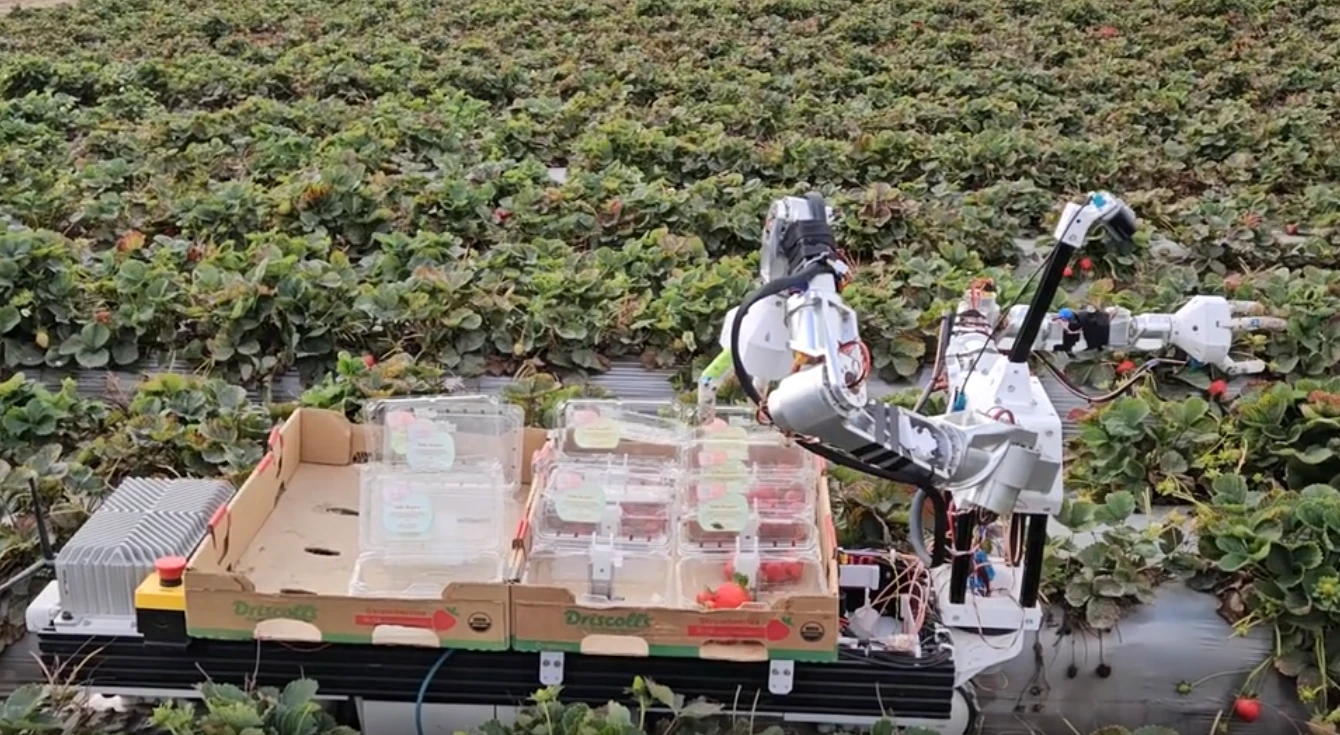
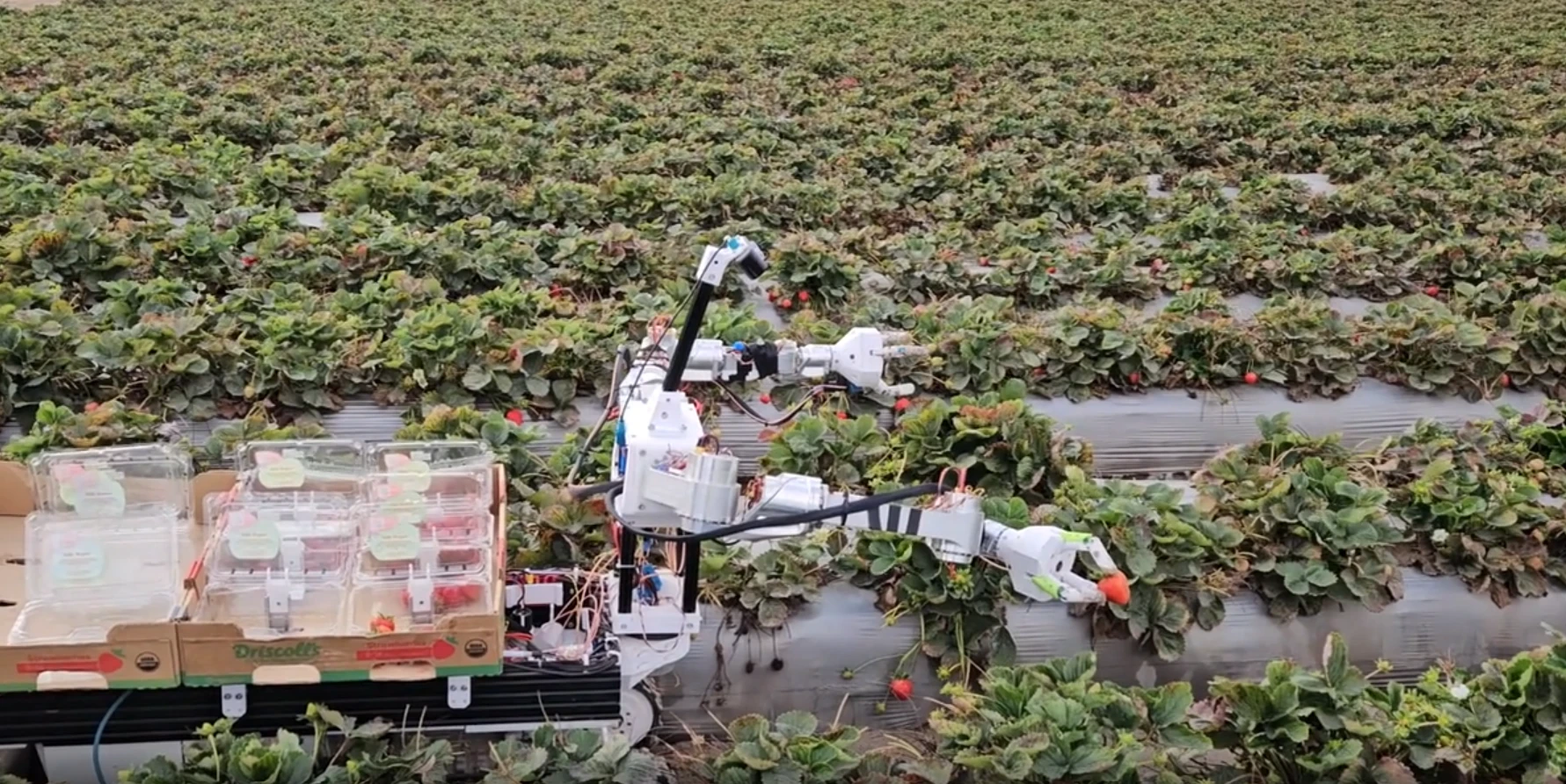
  • AgRobotics semi-humanoid robot picking a strawberry with its gripper in a strawberry field in Salinas, CA

    agrobotics · 2026

    semi-humanoid robot

    Led the mechanical design and development of a semi-humanoid robot, from concept through working prototype, applying DFM and GD&T across the platform to prepare parts and assemblies for production.

    in the field with Physical Intelligence

    The robot is now working in commercial fields. In October 2026, Physical Intelligence featured it in the launch of the Pi API beta: footage from a strawberry field in Salinas, CA shows it harvesting in the furrow between beds, running π foundation models fine-tuned for the task.

    → watch it in Physical Intelligence’s API announcement (select “AgRobotics”)

    a note on what’s shown here

    Most of the design work on this robot is under NDA, so CAD, internal photos and technical specifics aren’t shown here. This page sticks to what AgRobotics and Physical Intelligence have shown publicly. I’m happy to talk through my role and design process in more detail, within those limits.

    rolelead mechanical design: arms, torso & chassis
    stackFusion 360 · DFM · GD&T · actuator & battery selection
    seen inPhysical Intelligence: Pi API beta launch, Oct 2026
  • Custom 7-DOF robot arms on the AgRobotics robot placing strawberries into clamshells in a strawberry field

    agrobotics · 2026

    custom 7-dof arm fleet

    Designed, built and tested a fleet of 750 mm, 7-DOF arms in one month, sized to specific reach and payload requirements. Over the next four months they logged 500+ hours of operational testing and teleoperation data collection.

    reach750 mm, 7-DOF
    built inone month
    logged500+ hours
  • agrobotics · 2026

    gello teleoperation rig & field data pipeline

    A fast-to-deploy GELLO rig for field operators, iterated until it withstood 500+ hours of use. Helped build the end-to-end pipeline collecting robot data outdoors, 16 hours a day, seven days a week.

    uptime16 h/day, 7 days/week
    stackGELLO · teleoperation · robot data pipelines
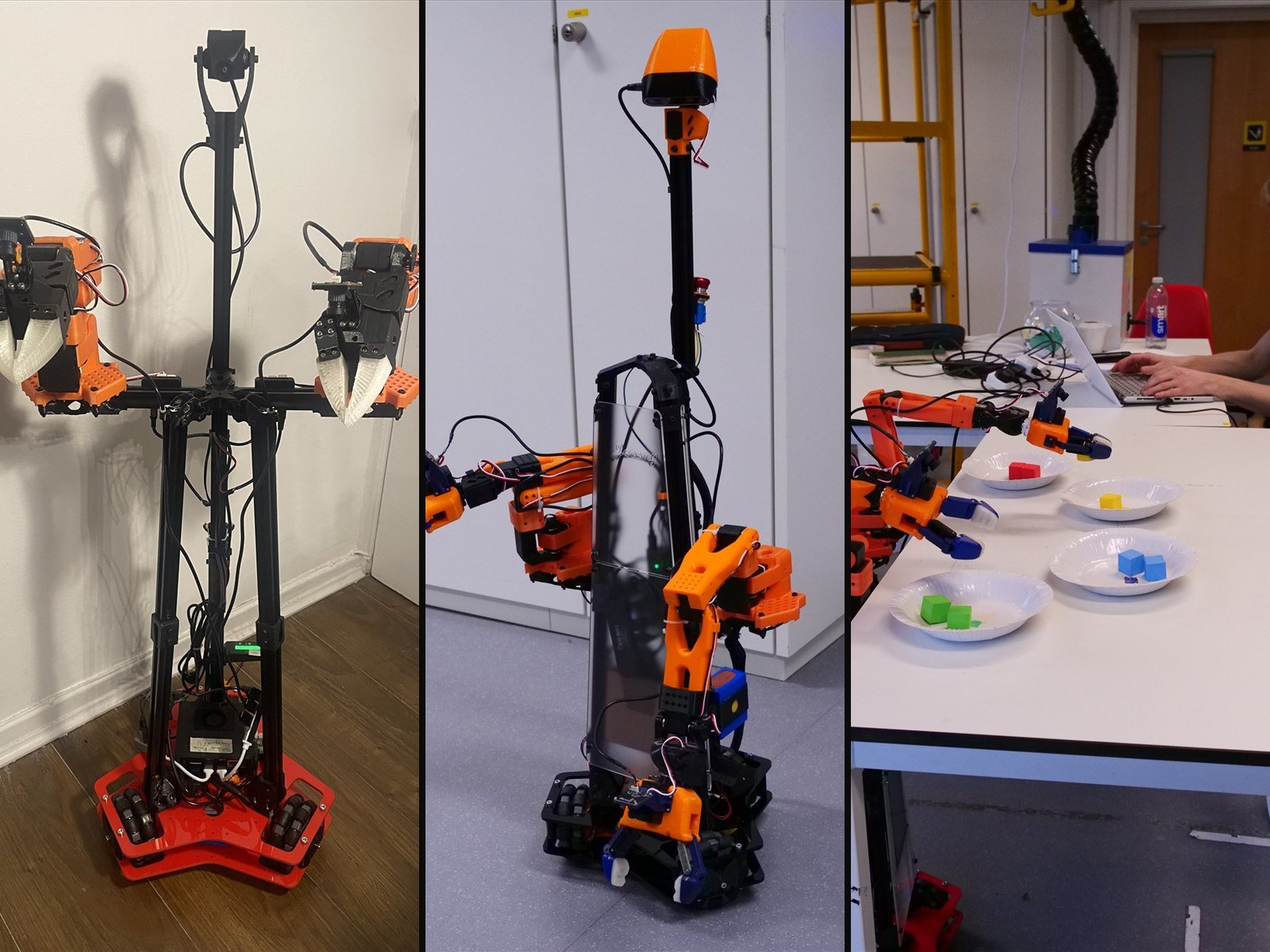
  • OB15 evolution: the v2 two-arm frame on a red base, the v3 robot with lift and head camera, and OB15 sorting coloured blocks into bowls

    personal project · ongoing

    ob15 — bimanual mobile manipulator

    A two-armed mobile robot for imitation learning, built for under £1,000 on a home 3D printer: omni-wheel base, 600 mm lift, pan-tilt head camera and two SO-101 arms, controlled in VR.

    code → github.com/ImpurestTadpole/ob15

    01 · the problem

    Research robots cost as much as a car

    Mobile bimanual platforms like Stanford’s Mobile ALOHA cost around $30,000, so robot learning stays in well-funded labs. Students, researchers and hobbyists working with limited space and budgets are locked out.

    02 · the hypothesis

    Open hardware is good enough for real research

    If low-cost parts (SO-100/101 arms, a LeKiwi base, PLA and PETG prints) are combined with Hugging Face’s LeRobot framework, a robot costing under £1,000 can learn real two-handed tasks from teleoperated demonstrations.

    Target: complete a task with more than 80% success.

    03 · planning

    Constraints first, then the build order

    • Constraints: under £1,000, printable on a home 3D printer, recyclable PLA and PETG, and fully compatible with LeRobot.
    • Objectives: design an original lift for vertical reach, extend the XLeRobot software for this robot and VR control, collect demonstration datasets, and evaluate trained policies on real tasks.
    • Approach: start from a near-stock LeKiwi to prove the software and data pipeline before designing any custom hardware.

    04 · executing

    v1: a working robot in six weeks

    In March 2025 I built a near-stock LeKiwi with a leader–follower arm setup. Within six weeks it could be teleoperated, record data and run imitation-learning policies, with basic navigation and some dexterity.

    It also showed what was missing: the base wasn’t stable, the wheels were weak, and a single low arm couldn’t reach most real tasks.

    05 · iteration

    v2 and v3: fixing what the robot taught me

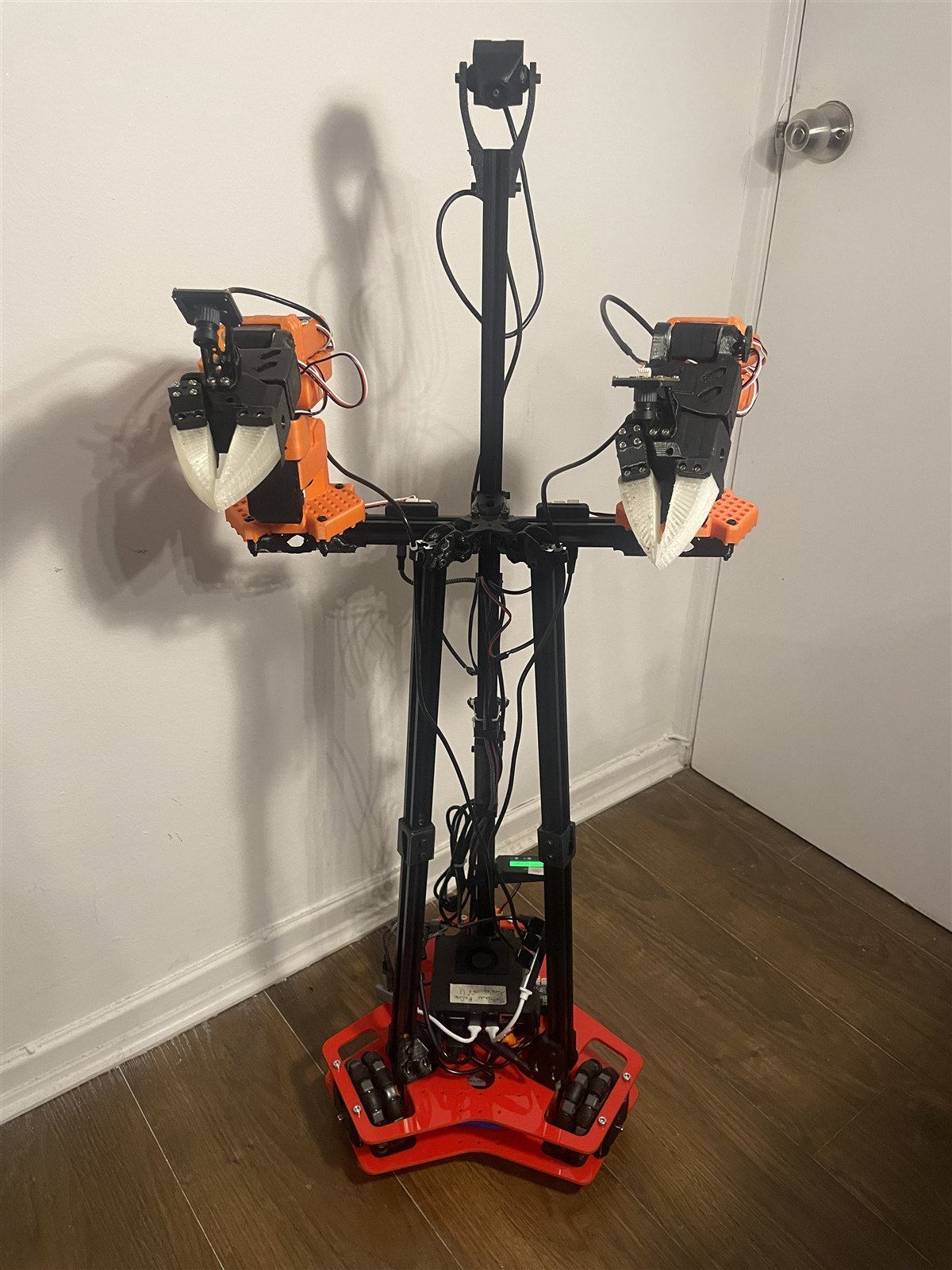
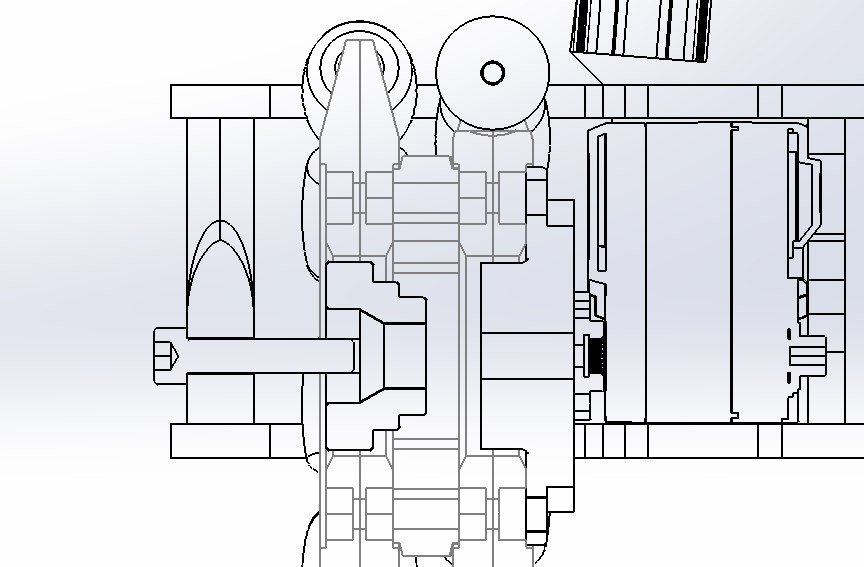
    • v2 · Aug 2025: a new frame for height and two arms. The extra weight made the wheels sag on the motor shafts, so I added a supported axle so the chassis carries the load and the motors only drive. A Raspberry Pi 5 became a bottleneck, so I moved to a Jetson Orin Nano. After two months fighting experimental VR software, XLeRobot’s release got both arms working in VR.
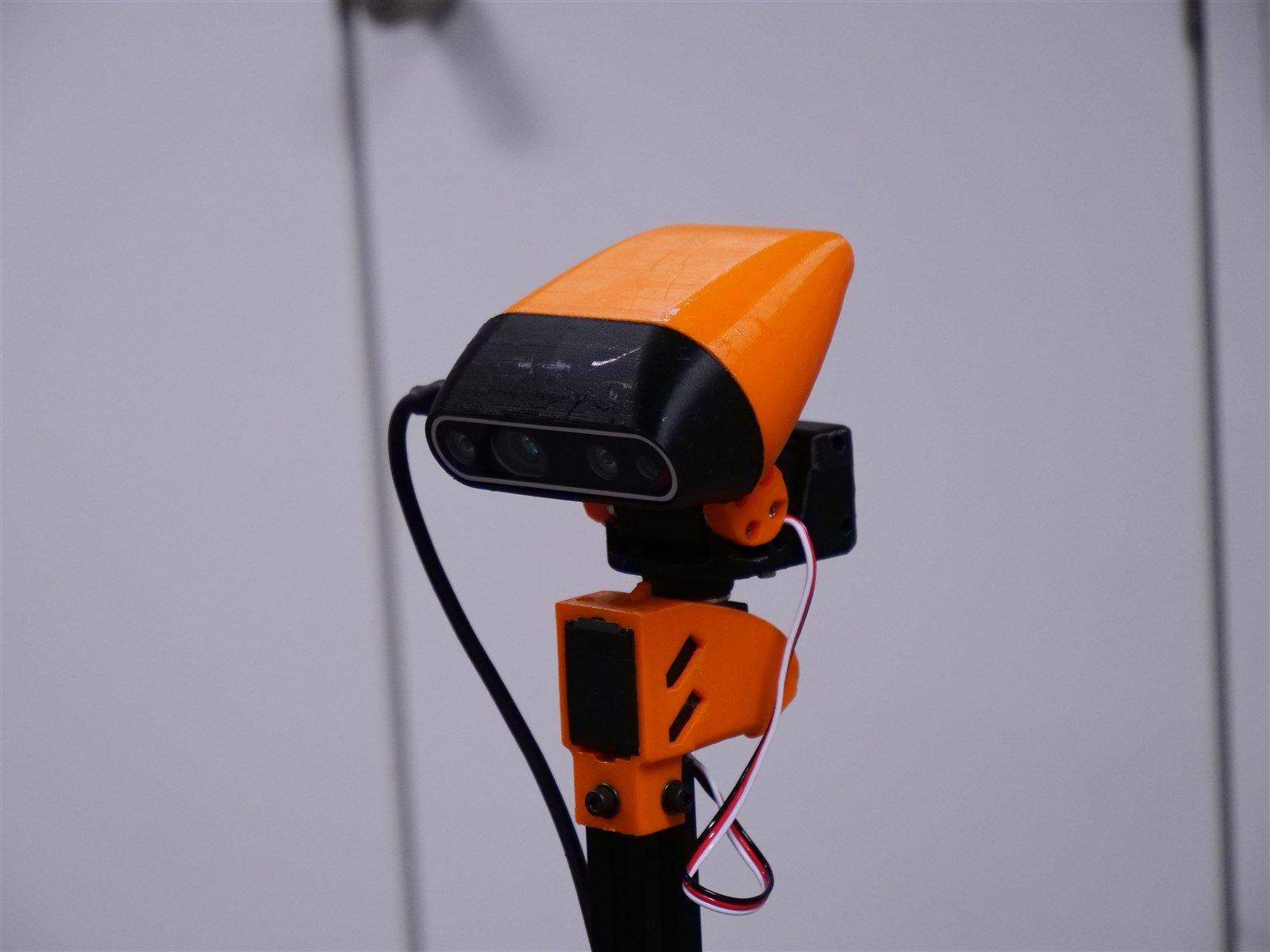
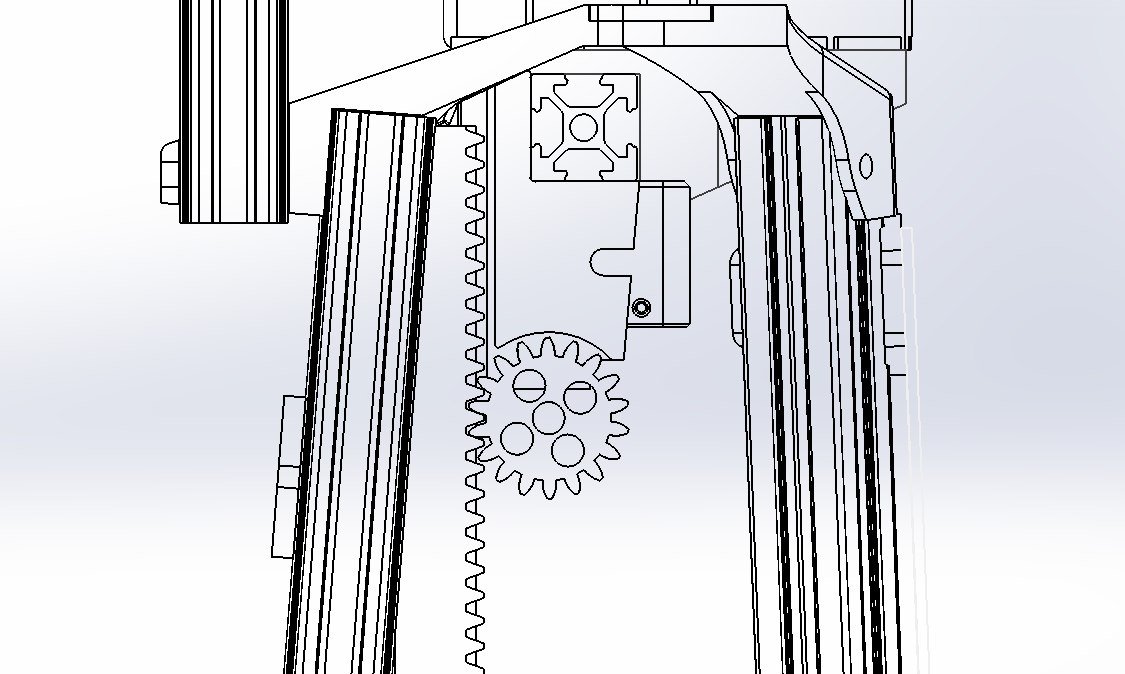
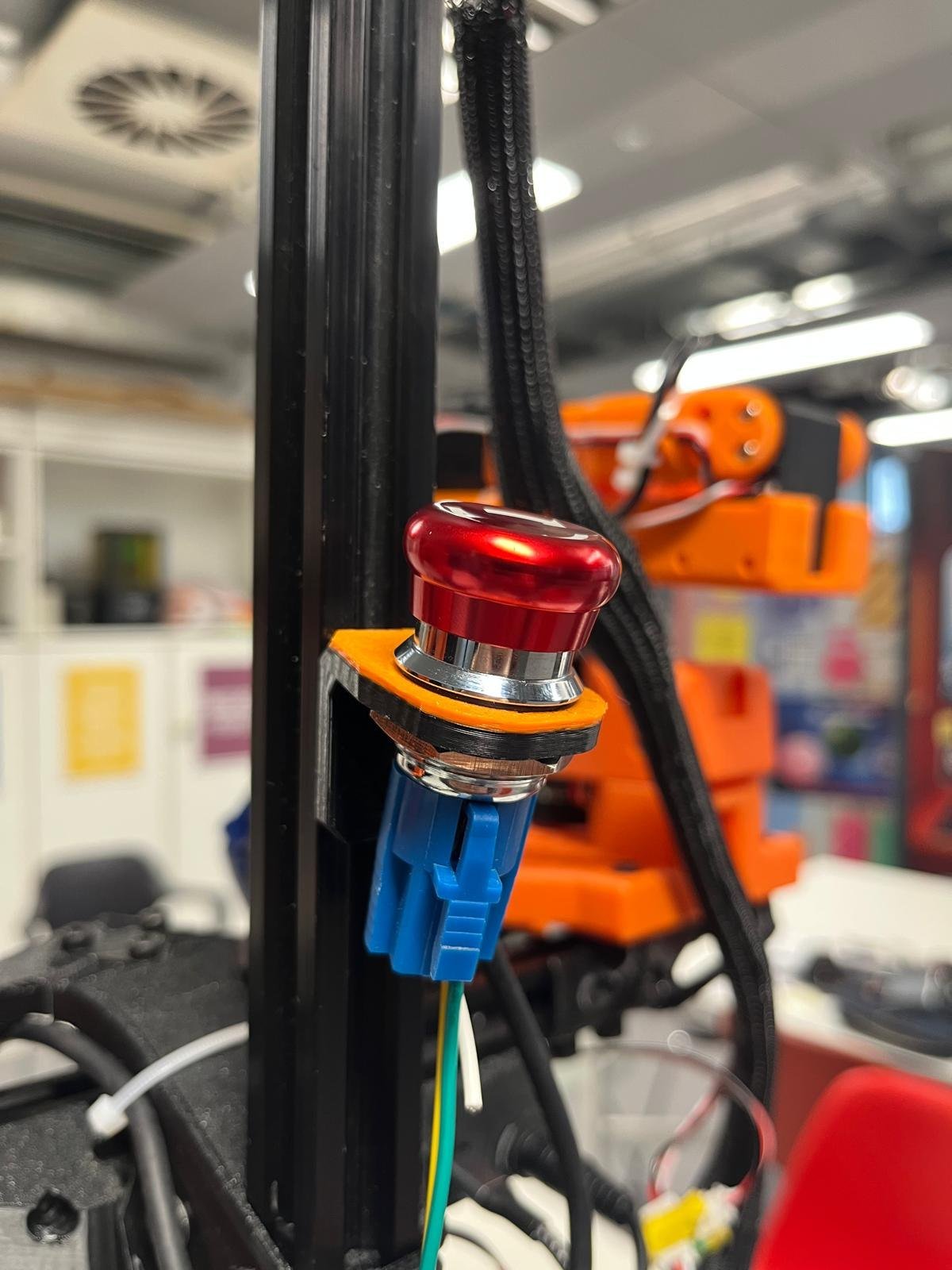
    • v3 · Jan–Feb 2026: Pincopen parallel grippers, a pan-tilt head camera that follows the operator’s headset, a rack-and-pinion lift with 600 mm of travel (chosen over a lead screw for torque), an independent ESP32 e-stop that cuts motor power, and stage-aware reward annotation (SARM) for the datasets.
    OB15 v2: two SO-100 arms on a tall extrusion frame above a red omni-wheel base
    v2 · 2025
    CAD cutaway of the wheel support that moves the load off the motor shaft
    the axle fix
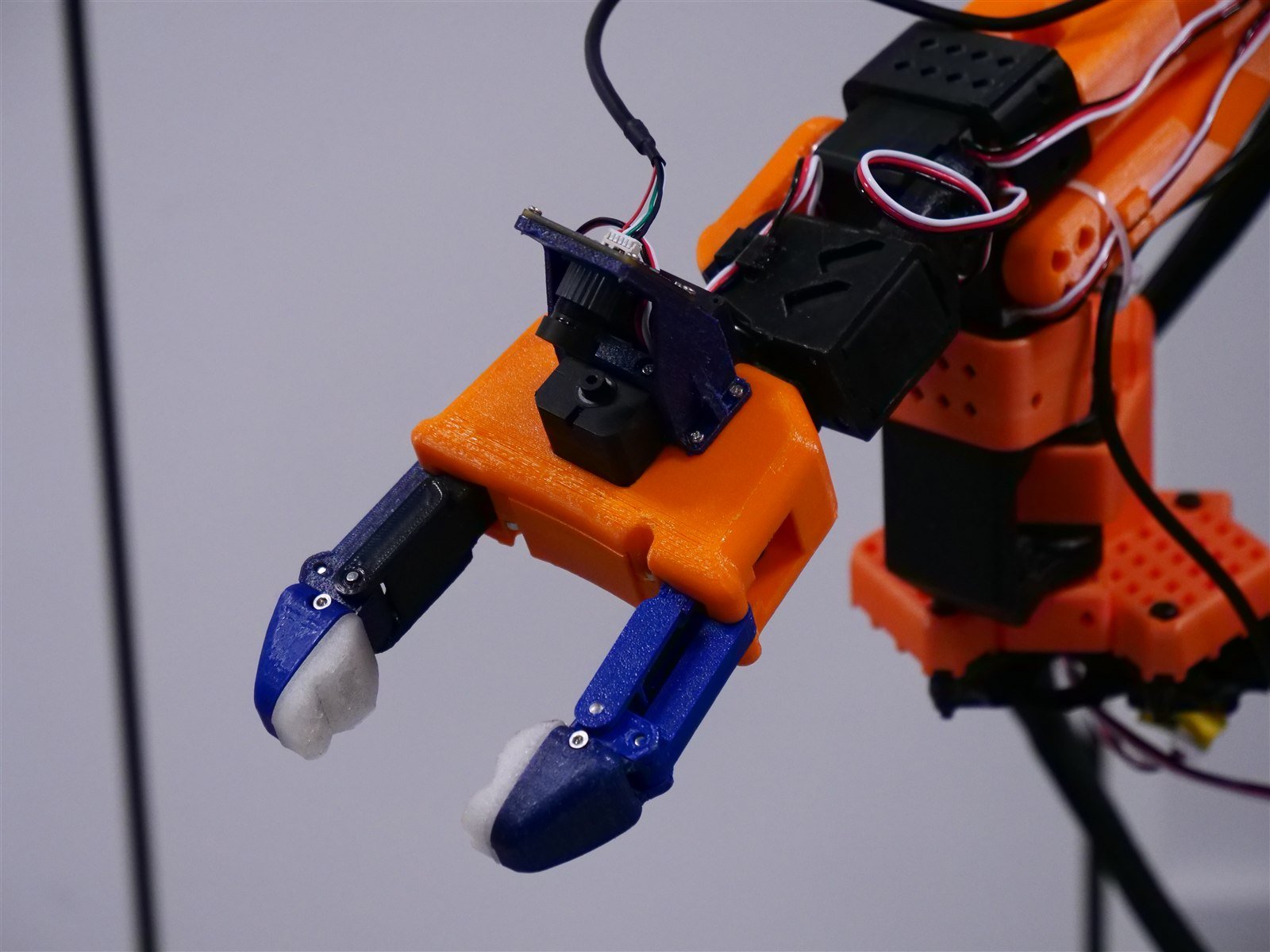
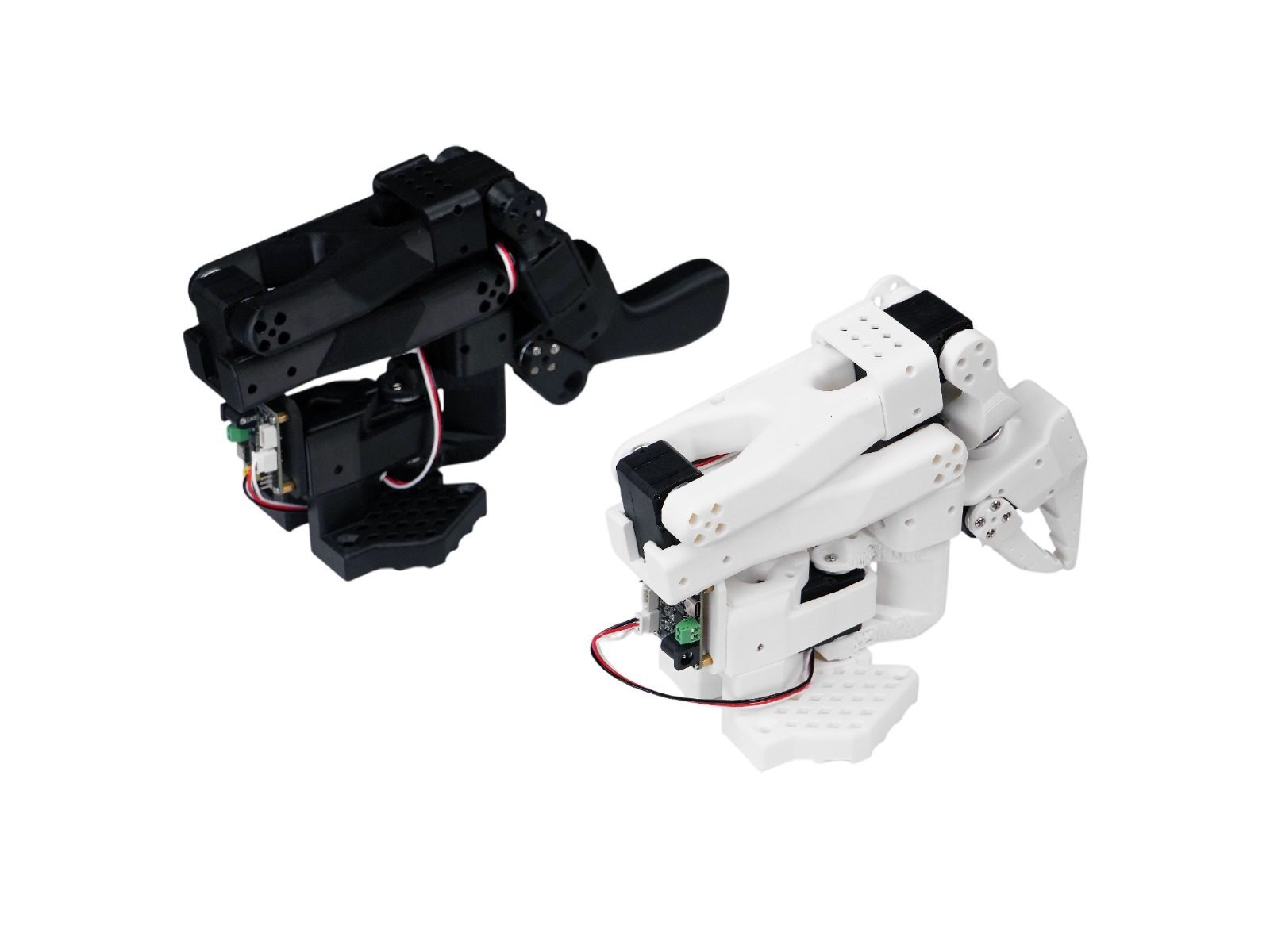
    Close-up of a v3 arm with Pincopen parallel gripper
    Pincopen grippers
    Pan-tilt head camera on top of OB15
    pan-tilt head camera
    CAD cutaway of the rack-and-pinion lift
    rack-and-pinion lift
    Red emergency stop button mounted on OB15's frame
    independent e-stop

    06 · latest version

    Results, and what’s next

    About 8 hours of teleoperated data across four tasks: block transfer, putting a tool in a box, sorting blocks by colour, and mobile trash pickup. Overall success was 43%, against Mobile ALOHA’s ~90% at roughly 30× the cost. Colour sorting failed at first, then worked after targeted data collection; a clear plastic bottle on a featureless floor was the hardest case.

    The lesson: data quality matters more than quantity. Next comes a centre-of-mass redesign to support tactile sensing on the grippers, a holonomic base and larger arms. Read more: the hardware → · the policy learning →

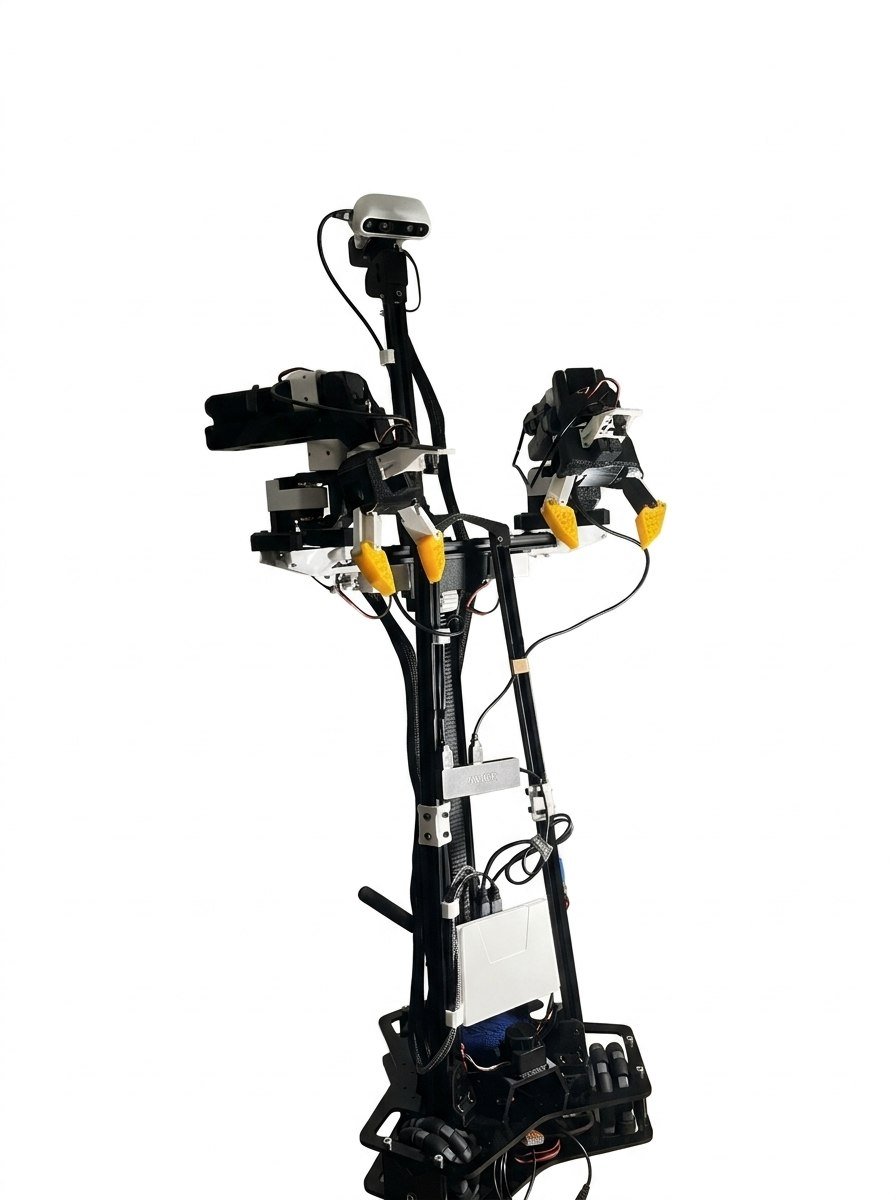
    The latest OB15 build: black frame, two arms with yellow-tipped grippers, a head camera on the mast and omni-wheel base
    the latest build
    end-to-end: driving to the table and putting the pliers in the box
    the tool-in-a-box task
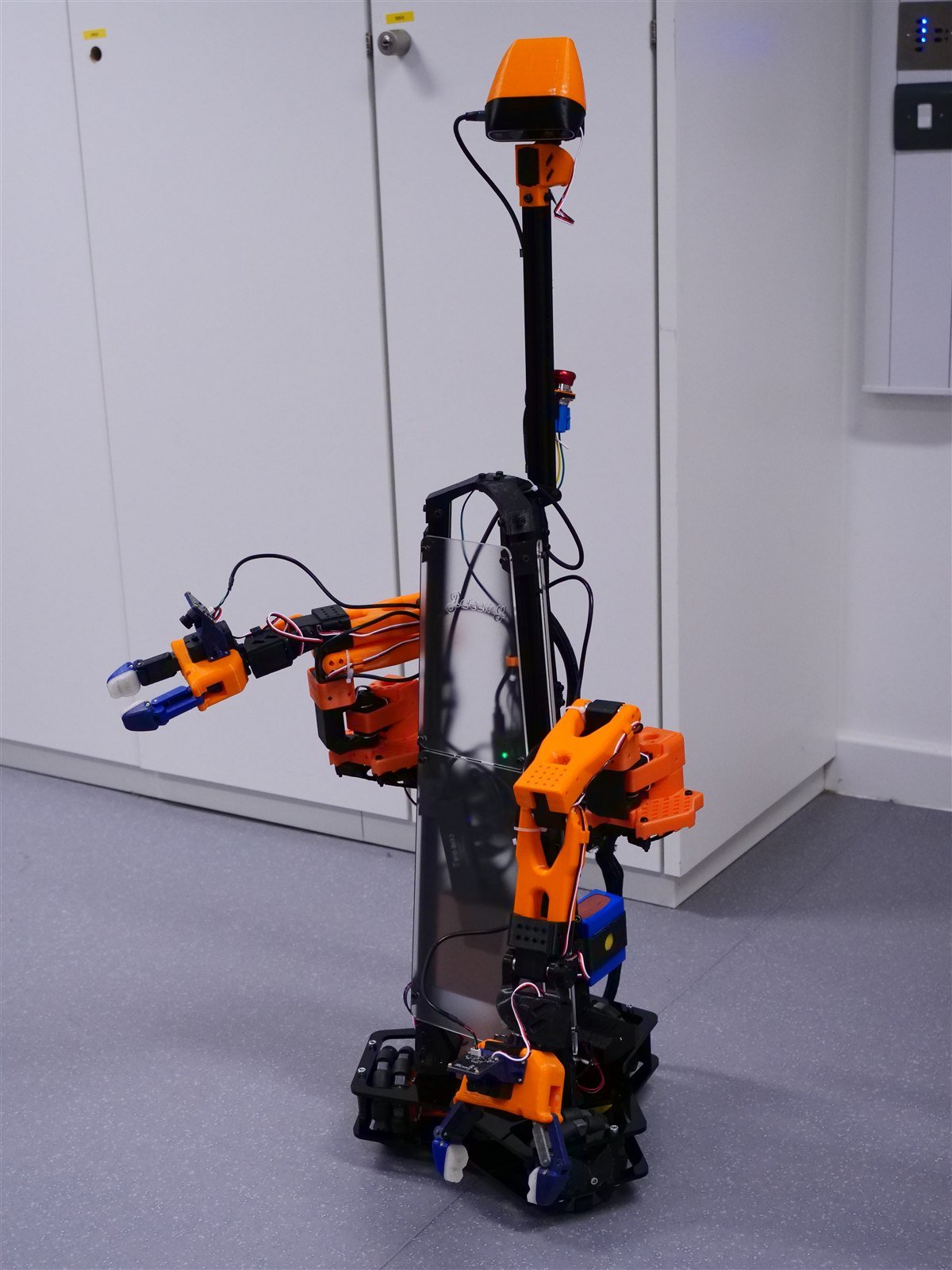
    OB15 v3 standing in a lab: two orange arms on a lift, omni-wheel base and orange head camera
    v3 · 2026
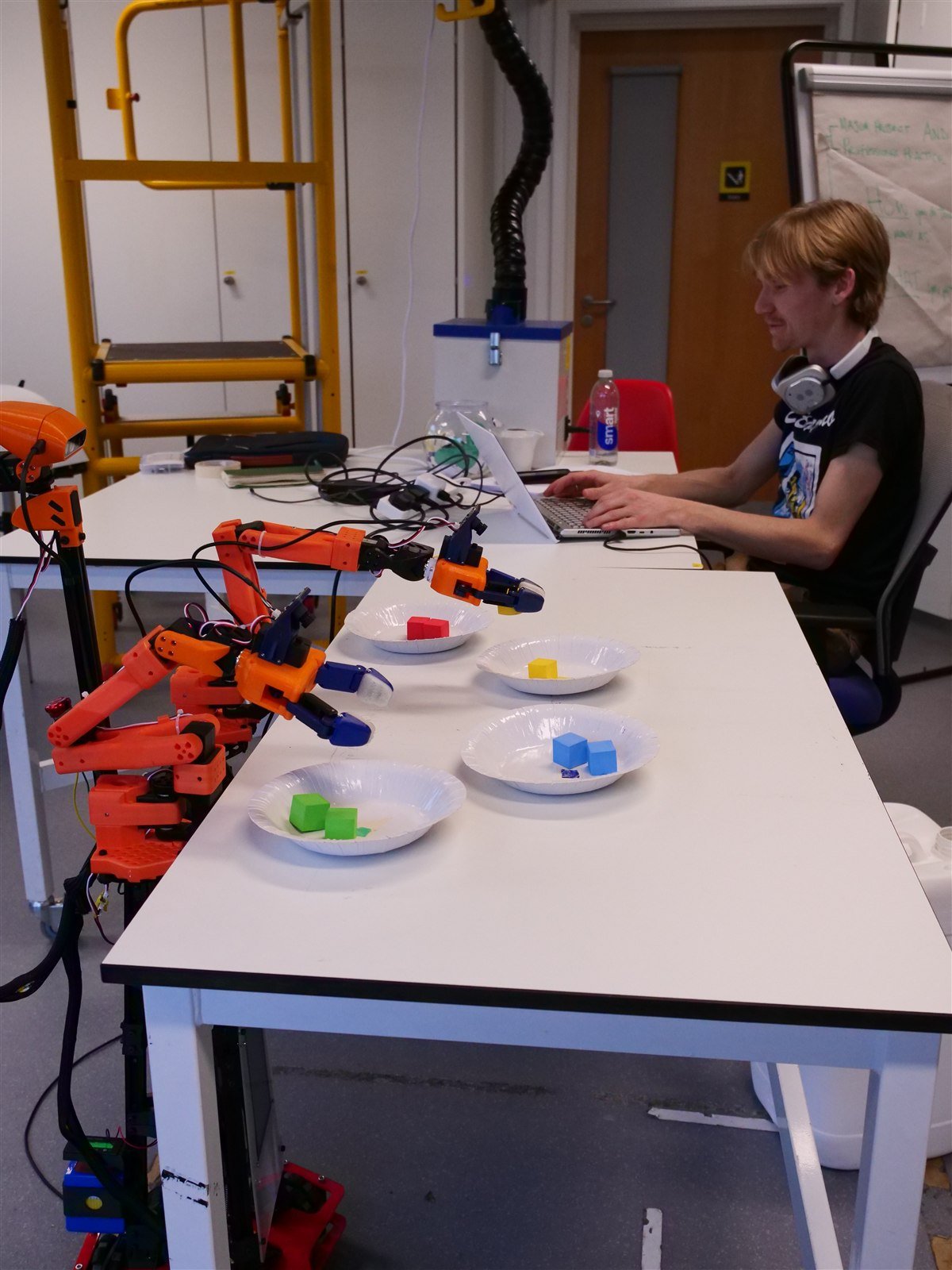
    OB15 sorting coloured blocks into matching bowls on a lab table
    sorting blocks by colour
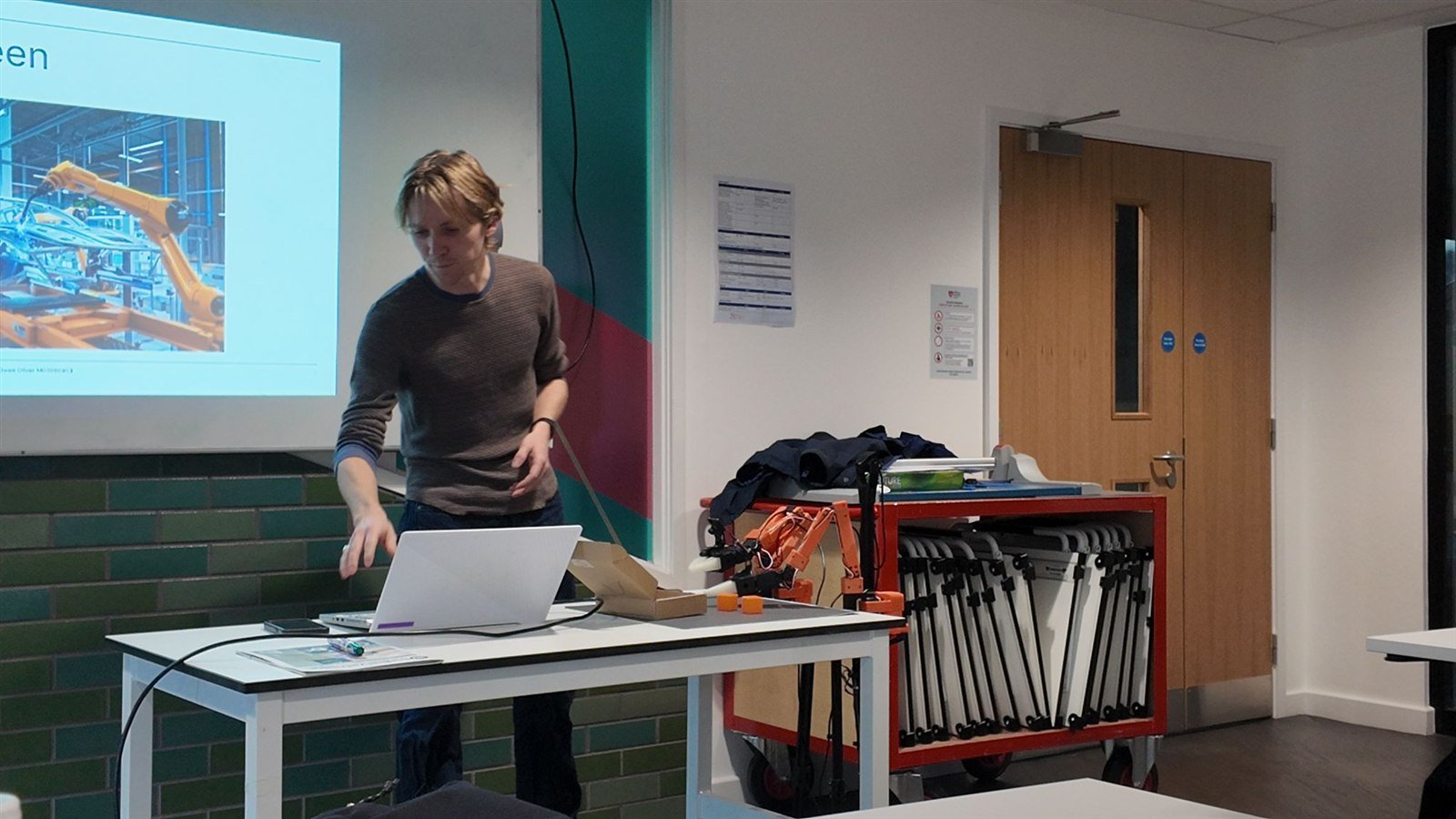
    Owen presenting OB15 at Middlesex University
    live demo, Middlesex University
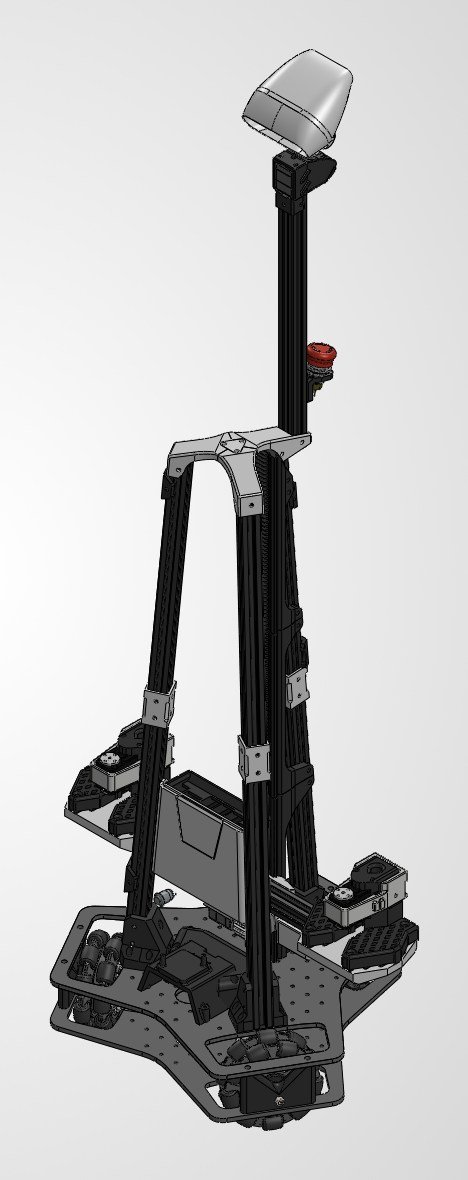
    OB15 bimanual mobile robot CAD model without covers, three-quarter view showing the extrusion frame, lift and omni-wheel base
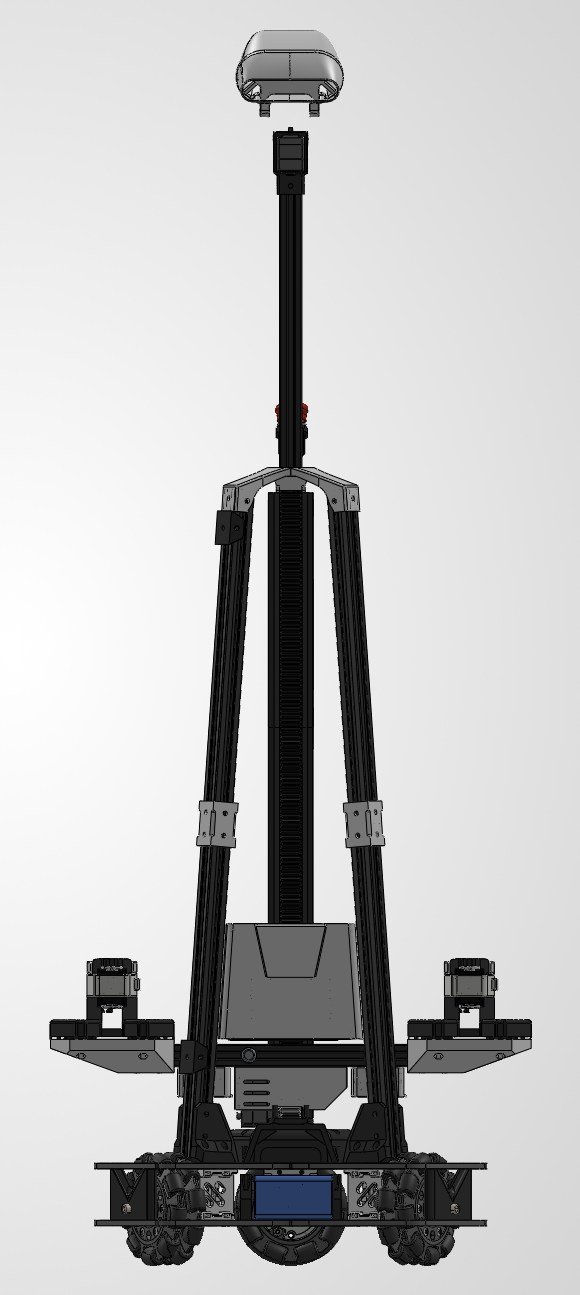
    OB15 CAD model without covers, front view
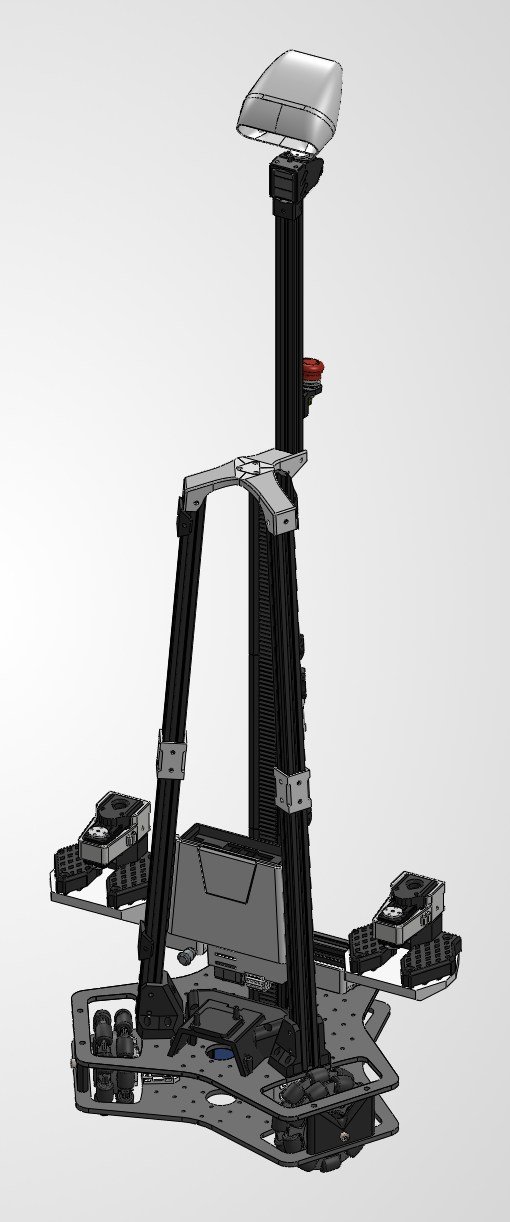
    OB15 CAD model without covers, rear three-quarter view
    stackROS 2 · Nav2 · SLAM · LeRobot · SmolVLA
    controlMeta Quest VR, voice/LLM
    datasetsOB15 datasets on Hugging Face · all of my datasets
    codegithub.com/ImpurestTadpole/ob15 · telegrip_ob15 (VR teleop) · LeRobot fork · XLeRobot fork
  • agrobotics · 2025 internship

    umi handheld data-collection rig

    One of several data-collection prototypes built while helping establish the company’s robot data-collection system.

    stackUMI · data collection
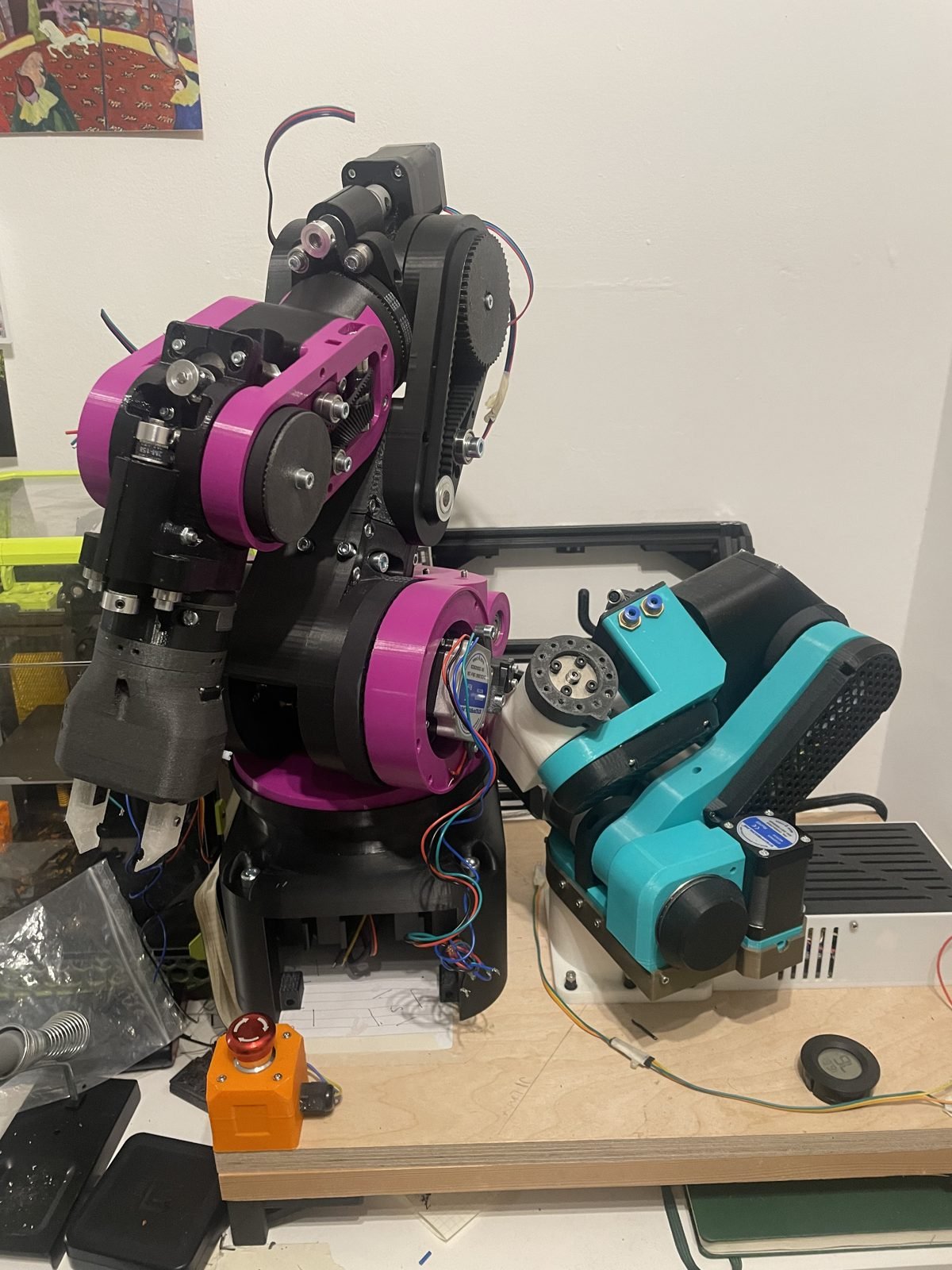
  • open-source ml robotic arm

    student team lead

    open-source ml robotic arm

    Led a small team adapting open-source vision-language-action models to control robot arms for varied manufacturing tasks.

    01 · the problem

    Fixed automation can’t handle variety

    Traditional robot arms repeat programmed moves, so they struggle with high-variance manufacturing work. My text-controlled arm showed that simple object detectors weren’t enough either.

    02 · the hypothesis

    Open VLA models can drive real arms

    If open vision-language-action models, like Physical Intelligence’s openpi used through LeRobot, are retrofitted to affordable open-source arms, they can generate actions from camera images and arm positions and learn a wide variety of tasks.

    03 · planning

    Three arms, one pipeline

    • Three open-source arms: the Parol 6 by Source Robotics, the Mikobot 1, and an SO-ARM100 leader–follower pair.
    • A physical emulator, an identical arm with the same geometry (DH parameters), to make recording training episodes easy, and plans for a simulated twin to generate synthetic training data.
    • A team of up to five, in practice mostly two of us, with roles, delegation and risk managed in Notion and Trello.

    04 · executing

    Retrofitting the models

    We worked on getting the open models running on the three arms, which needed far more processing power than the text-controlled arm had used.

    05 · iteration

    Narrowing to what worked

    The SO-ARM100 leader–follower pair proved the fastest way to record demonstrations and train policies through LeRobot.

    06 · latest version

    Where it led

    Two years in a fast-moving field changed my direction. The SO-100 work became towel folding with ACT, my first fully autonomous task, and then the mobile robots LeKiwi and OB15.

    stackVLA · LeRobot · Parol 6 · SO-ARM100
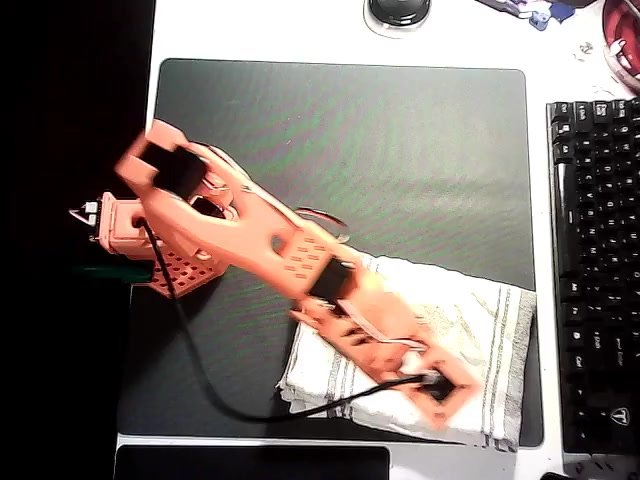
  • Overhead view of an orange SO-100 robot arm folding a white tea towel on a desk

    robotics

    towel folding with act

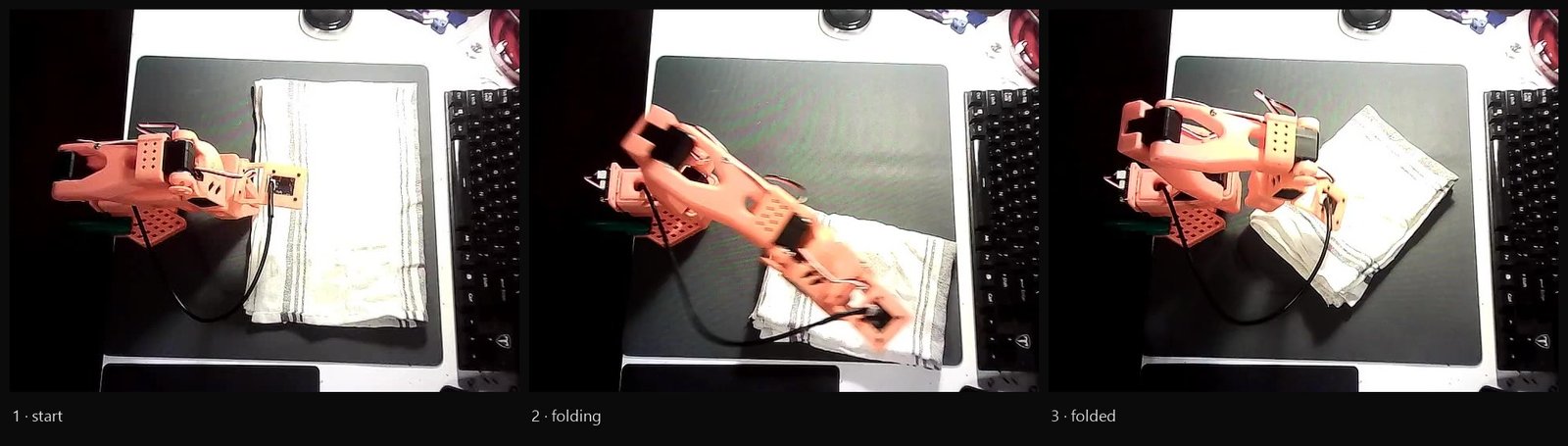
    An SO-100 arm that learned to fold a tea towel on its own with the ACT imitation-learning model, reaching 80% success.

    Three overhead frames of the SO-100 arm: towel flat, arm folding it, towel folded

    01 · the problem

    Cloth is hard for robots

    A towel changes shape every time it’s touched, so a robot can’t be programmed with a fixed set of moves to fold it. Repetitive chores like laundry are exactly the work robots should be taking off people’s hands.

    02 · the hypothesis

    A low-cost arm can learn folding from demonstrations

    If I show an inexpensive, open-source SO-100 arm enough examples by teleoperating it, the ACT (Action Chunking with Transformers) model can learn to fold the towel by itself, with no hand-written motion.

    03 · planning

    One task, one setup, measurable results

    • A leader arm to teleoperate the follower, recording through Hugging Face’s LeRobot.
    • Two cameras and the same towel and desk for every demonstration, so the model learns the task rather than the background.
    • Success measured as the share of test runs where the towel ends up folded.

    04 · executing

    141 demonstrations

    In March 2025 I recorded 141 demonstrations, about 35 minutes of folding, and trained an ACT policy on them. The dataset is public on Hugging Face.

    05 · iteration

    Three rounds of testing in a week

    I evaluated the policy in three rounds (v2, v3.1 and v3.12), running 20, then 10, then 10 autonomous attempts and recording each one.

    06 · latest version

    80% success

    The final policy folded the towel in 80% of attempts. The dataset has become my most downloaded on Hugging Face, and the work led straight into mobile manipulation with LeKiwi and OB15.

    stackACT · SO-100 · LeRobot
  • text-controlled robotic arm

    robotics

    text-controlled robotic arm

    A Parol 6 arm with a camera on its wrist that recognises objects and acts on them from text input: my introduction to robot vision, embedded AI and arm control.

    01 · the problem

    Could a robot arm act on plain text?

    When I arrived in the UK for my degree I wanted a project I could build in a small space. Tools like ChatGPT had just shown what AI could do with text, and I wanted to know how far that could reach into the physical world.

    02 · the hypothesis

    Small, on-board vision is enough

    After talking with experts in the field, the goal became an arm that interacts with its surroundings based on text input. The bet: a small embedded vision module that recognises known objects, mounted on a self-built open-source arm, could find things and act on them without a big computer.

    03 · planning

    Open-source parts and a small team

    • Researched open-source arms that could be built from off-the-shelf parts, and learned the fundamentals of neural networks.
    • Chose the Parol 6 by Source Robotics, built from scratch from its GitHub project, with an OpenMV camera on the end.
    • Assembled a small team to build it.

    04 · executing

    From camera to coordinates

    The camera mapped a known object and sent its x and y position as JSON to an ESP32, which talked to the arm’s control software over WiFi. The OpenMV is a single camera and can’t see depth, so we used AprilTags to get the third coordinate.

    05 · iteration

    Adding a tool changer

    Once the arm could find objects, we designed and built a tool changer. The arm located it automatically and swapped to a new tool based on predefined AprilTags.

    06 · latest version

    It worked, and showed the next step

    It worked decently but not perfectly, and it taught me everything from embedded vision to arm kinematics. It also showed that fixed object detectors weren’t enough: vision-language models, like those Physical Intelligence was building, were the better route. That led to my open-source ML arm work.

    stackOpenMV · AprilTags · ESP32
  • robotics

    lekiwi mobile base

    Hugging Face’s open-source LeKiwi mobile base with an SO-100 arm: my first mobile robot-learning platform, and the first version of OB15.

    01 · the problem

    A fixed arm only reaches so far

    An arm bolted to a desk can only work within its own reach. Most useful tasks in a home or workshop need a robot that can move to where the work is.

    02 · the hypothesis

    Same learning, bigger workspace

    Putting the SO-100 on Hugging Face’s open LeKiwi base should let the same imitation-learning approach that worked for towel folding work across a much larger area.

    03 · planning

    Prove the software before custom hardware

    Build LeKiwi close to stock, with leader–follower teleoperation, to prove the software and data pipeline before designing anything custom.

    04 · executing

    201 demonstrations

    Built in about six weeks from March 2025. In April I recorded 201 demonstrations, about 54 minutes of data, and trained ACT policies on them. The dataset is public on Hugging Face.

    05 · iteration

    Tuning and testing

    From April to May 2025 I ran around 17 rounds of policy evaluation, adjusting settings between them. Testing also showed the hardware’s limits: the base wasn’t stable enough, the wheels were weak, and one low arm couldn’t reach most real tasks.

    06 · latest version

    Successful tasks, and the start of OB15

    LeKiwi completed tasks autonomously and proved the pipeline. Its limits became the brief for OB15: a stronger base, two arms and a lift.

    stackLeKiwi · SO-100