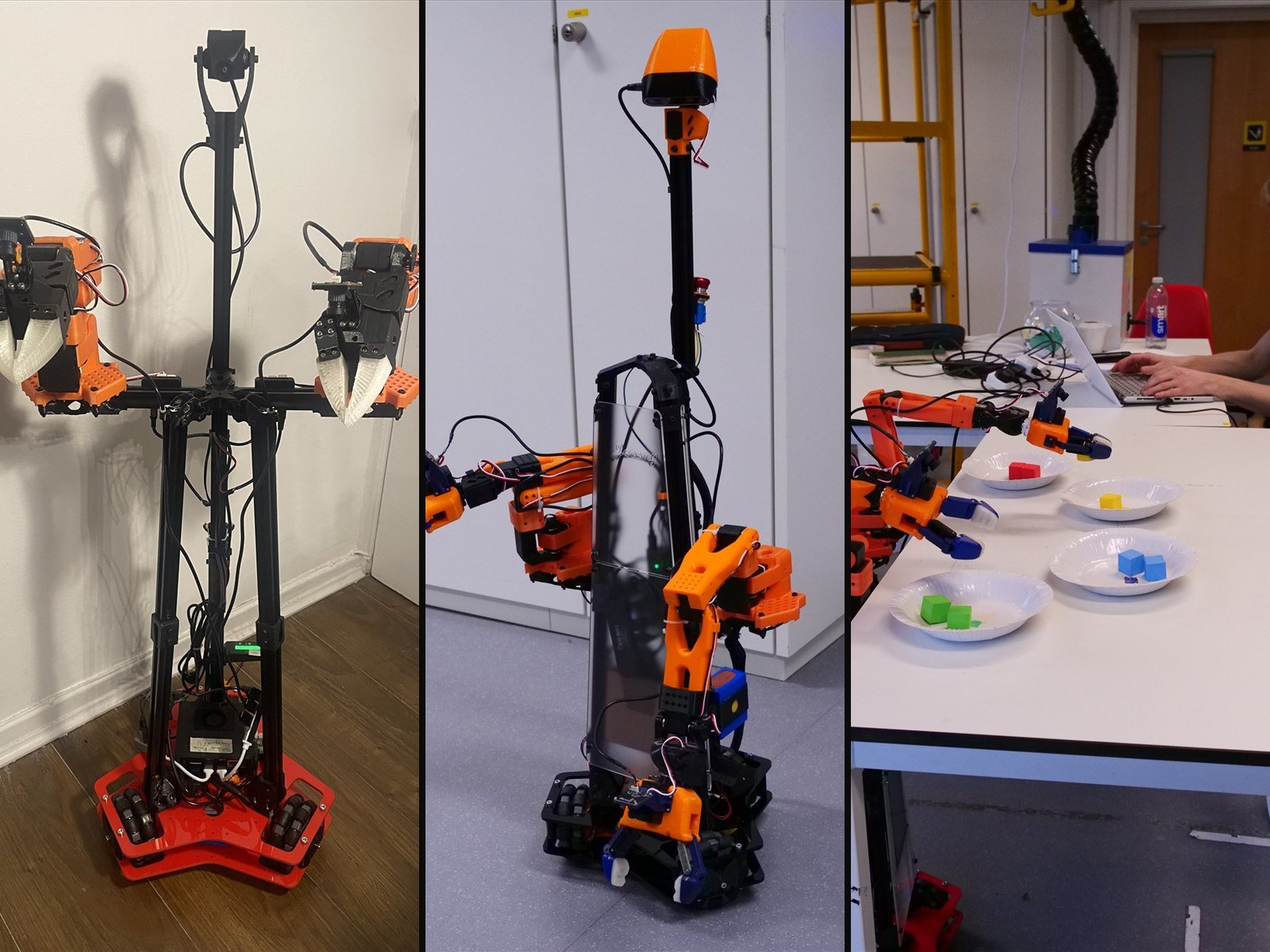
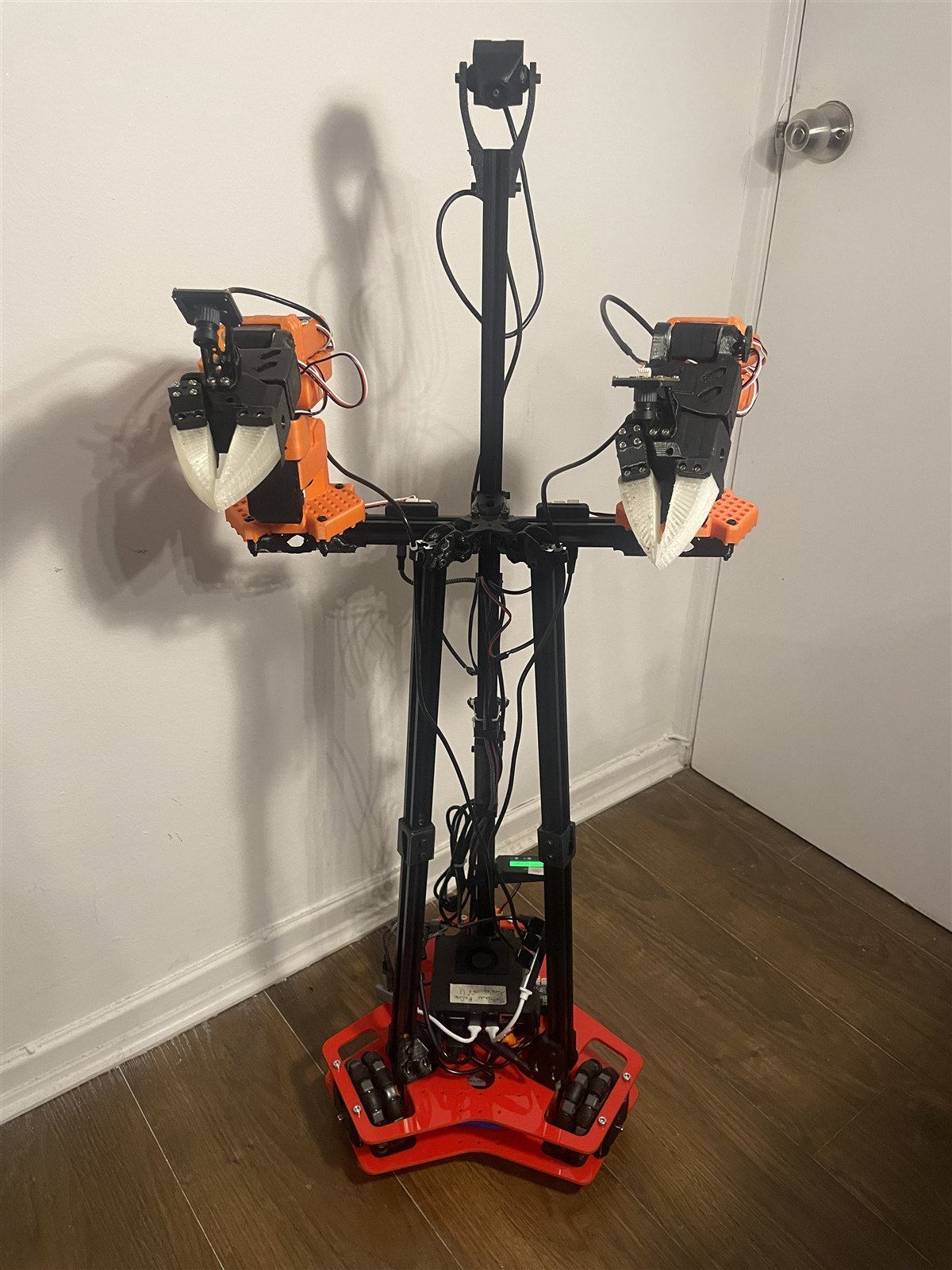
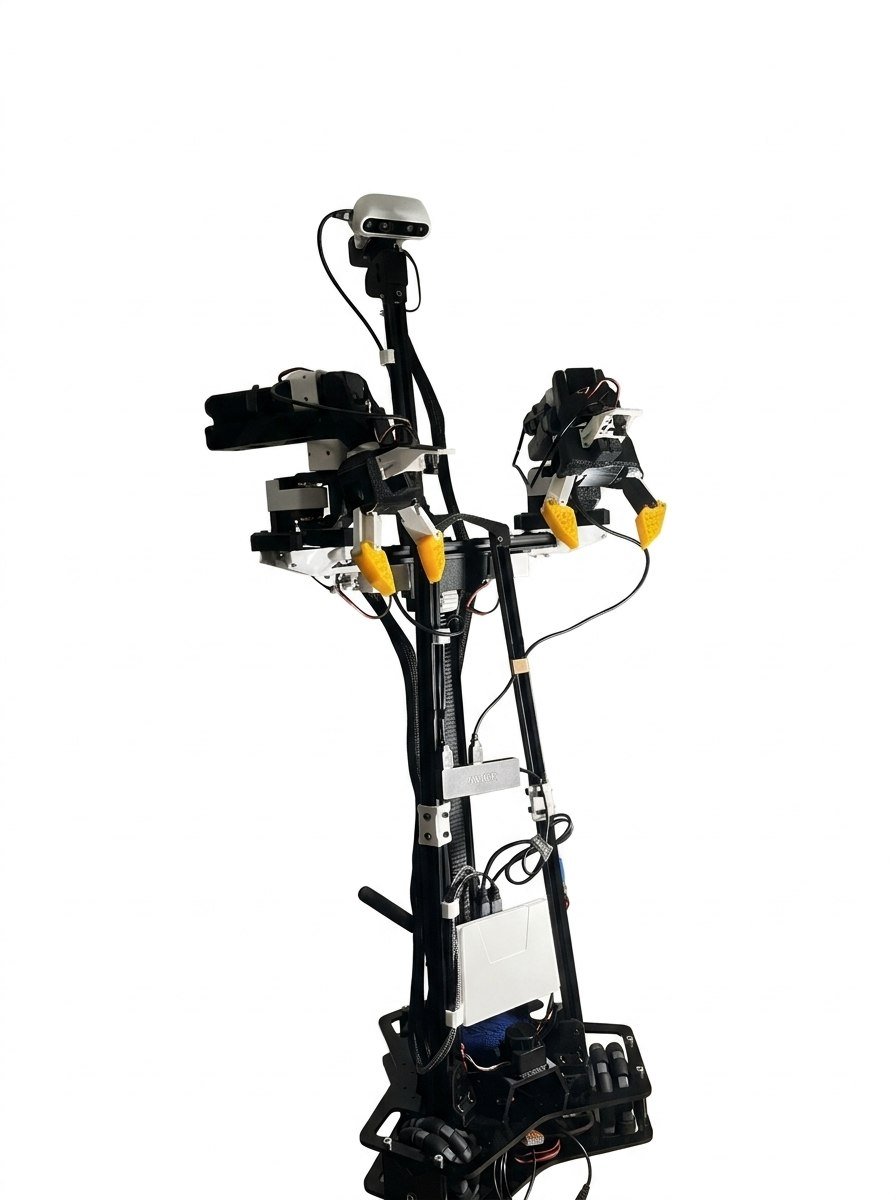
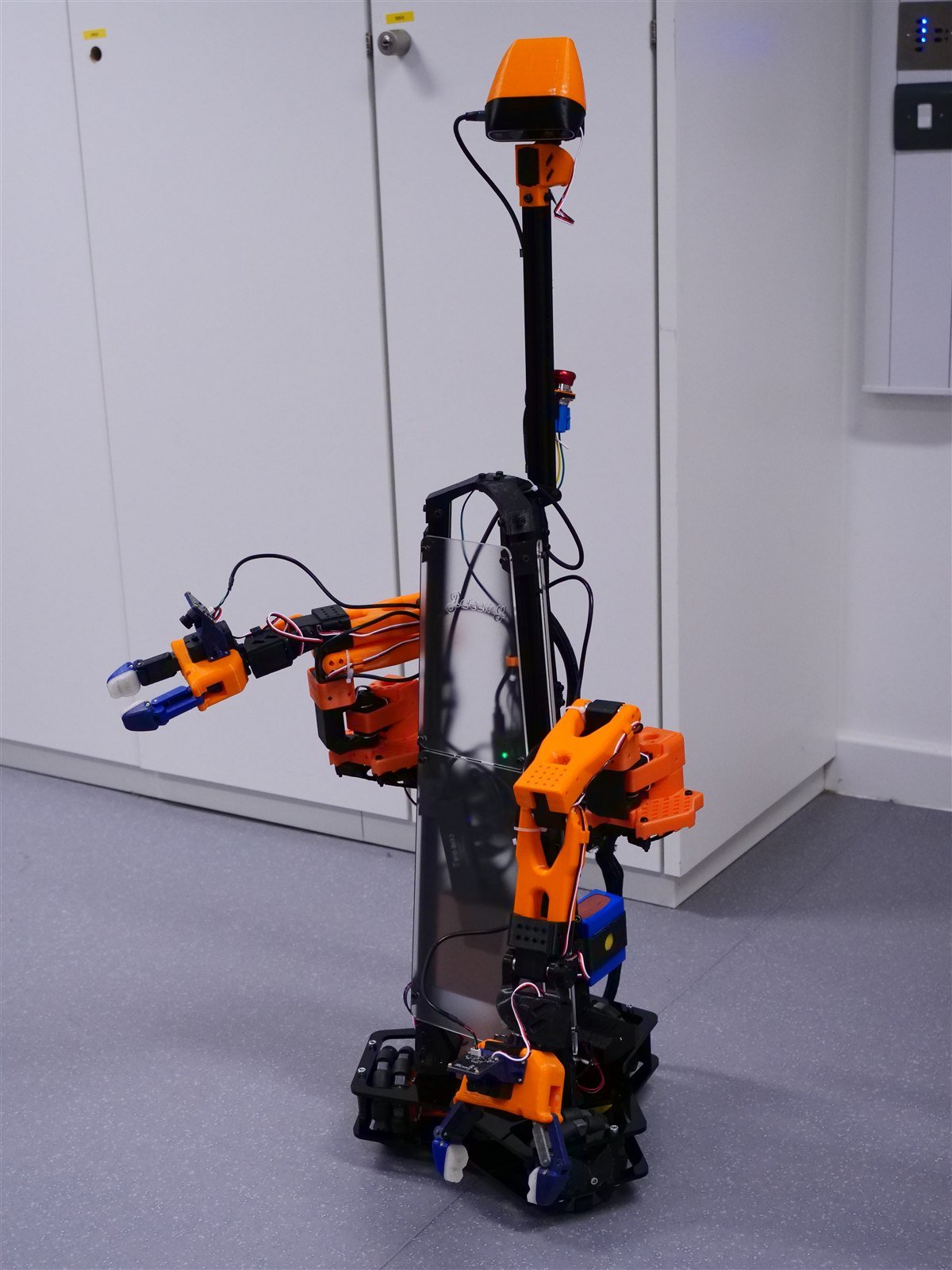
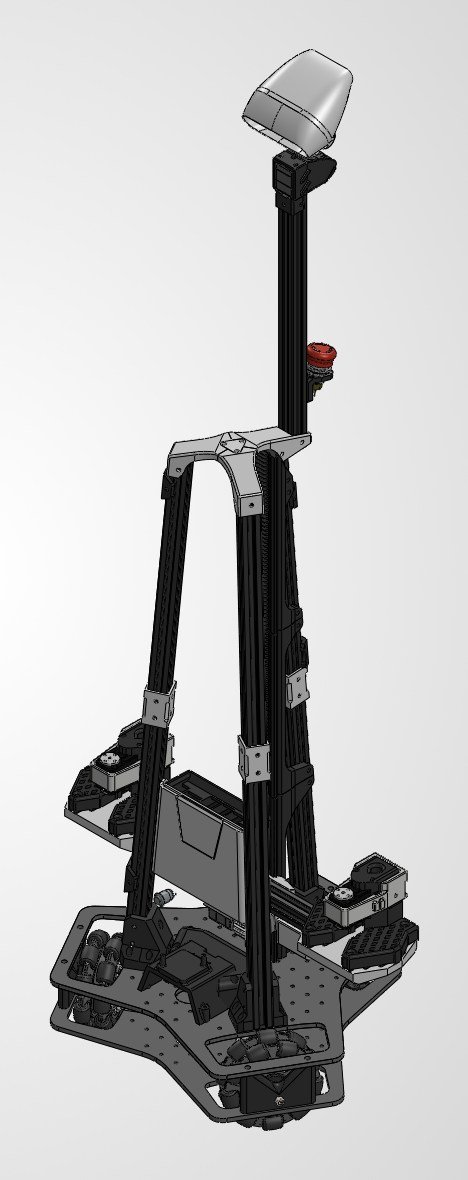
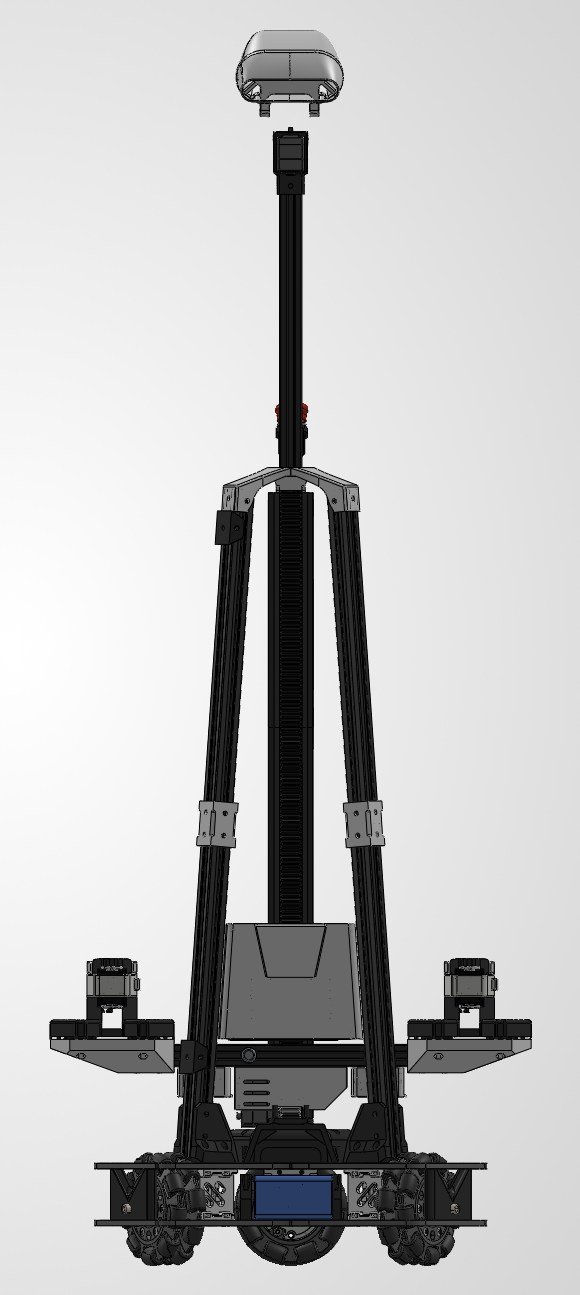
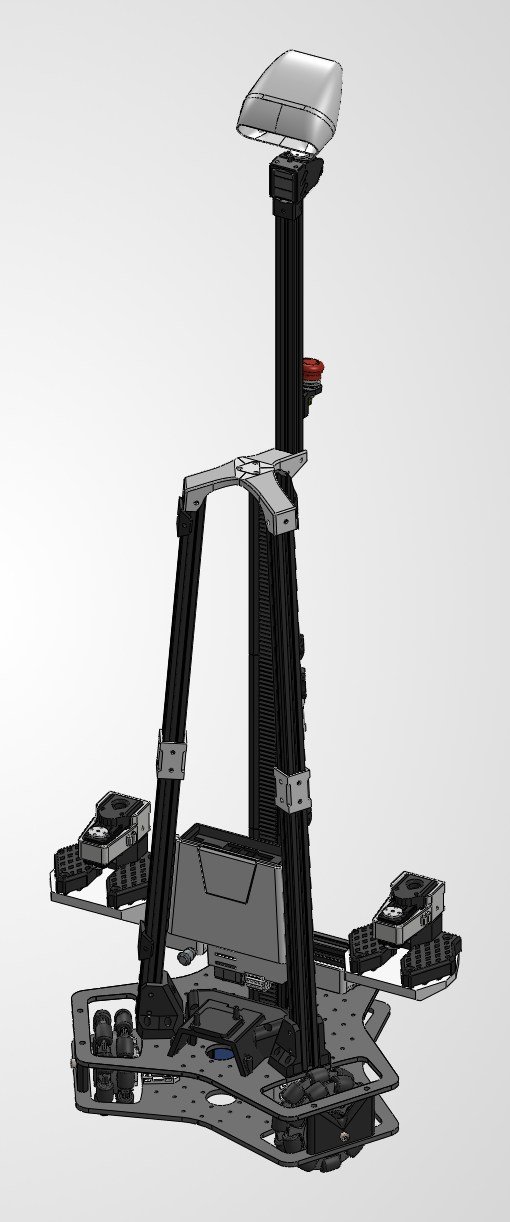
A two-armed mobile robot for imitation learning, built for under £1,000 on a home 3D printer: omni-wheel base, 600 mm lift, pan-tilt head camera and two SO-101 arms, controlled in VR.
code → github.com/ImpurestTadpole/ob15
01 · the problem
Research robots cost as much as a car
Mobile bimanual platforms like Stanford’s Mobile ALOHA cost around $30,000, so robot learning stays in well-funded labs. Students, researchers and hobbyists working with limited space and budgets are locked out.
02 · the hypothesis
Open hardware is good enough for real research
If low-cost parts (SO-100/101 arms, a LeKiwi base, PLA and PETG prints) are combined with Hugging Face’s LeRobot framework, a robot costing under £1,000 can learn real two-handed tasks from teleoperated demonstrations.
Target: complete a task with more than 80% success.
03 · planning
Constraints first, then the build order
- Constraints: under £1,000, printable on a home 3D printer, recyclable PLA and PETG, and fully compatible with LeRobot.
- Objectives: design an original lift for vertical reach, extend the XLeRobot software for this robot and VR control, collect demonstration datasets, and evaluate trained policies on real tasks.
- Approach: start from a near-stock LeKiwi to prove the software and data pipeline before designing any custom hardware.
04 · executing
v1: a working robot in six weeks
In March 2025 I built a near-stock LeKiwi with a leader–follower arm setup. Within six weeks it could be teleoperated, record data and run imitation-learning policies, with basic navigation and some dexterity.
It also showed what was missing: the base wasn’t stable, the wheels were weak, and a single low arm couldn’t reach most real tasks.
05 · iteration
v2 and v3: fixing what the robot taught me
- v2 · Aug 2025: a new frame for height and two arms. The extra weight made the wheels sag on the motor shafts, so I added a supported axle so the chassis carries the load and the motors only drive. A Raspberry Pi 5 became a bottleneck, so I moved to a Jetson Orin Nano. After two months fighting experimental VR software, XLeRobot’s release got both arms working in VR.
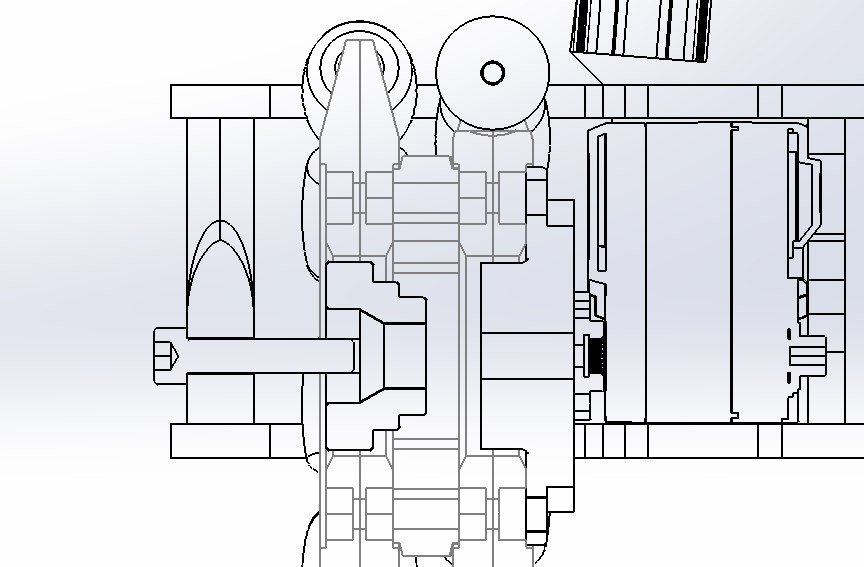
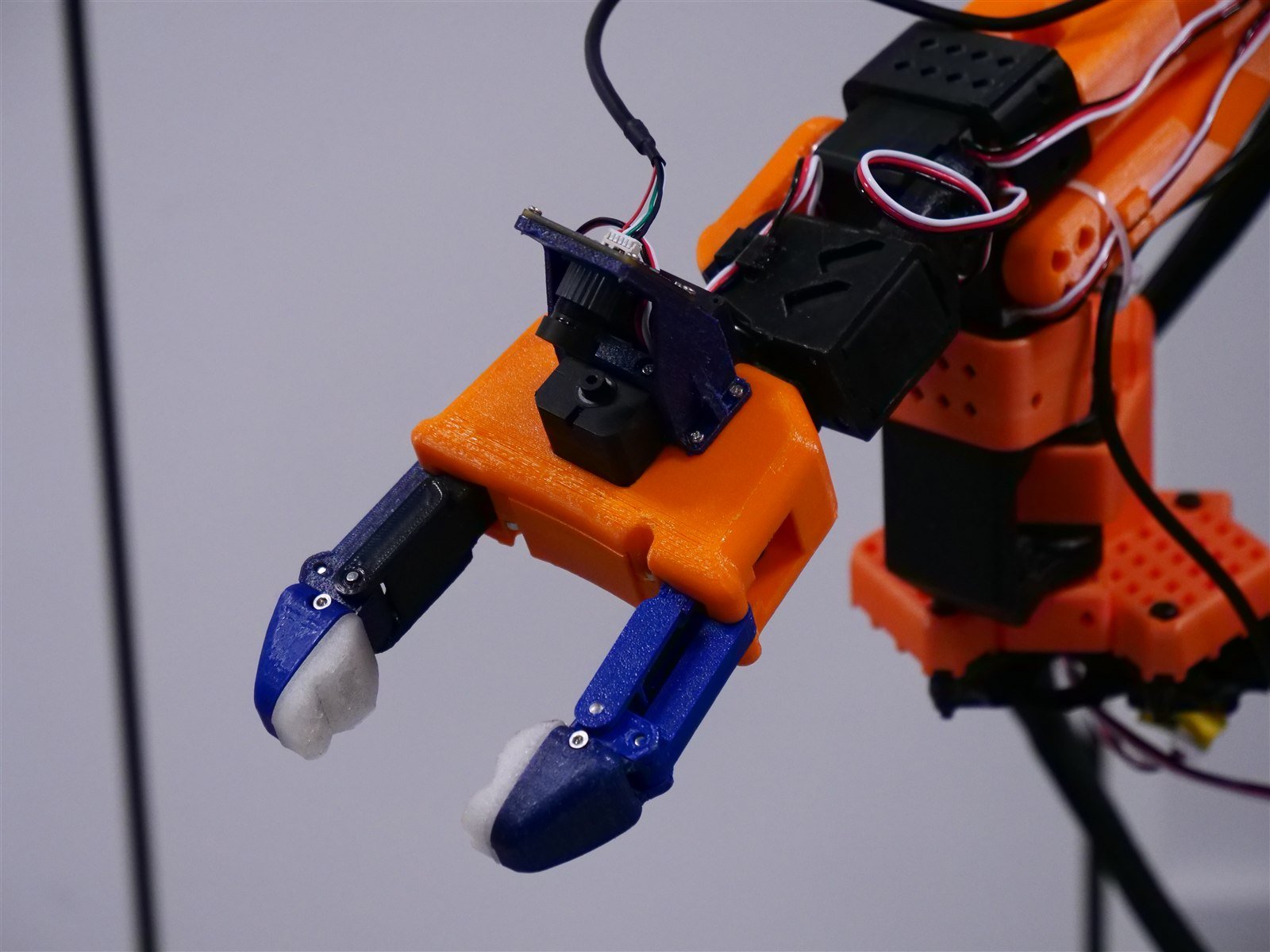
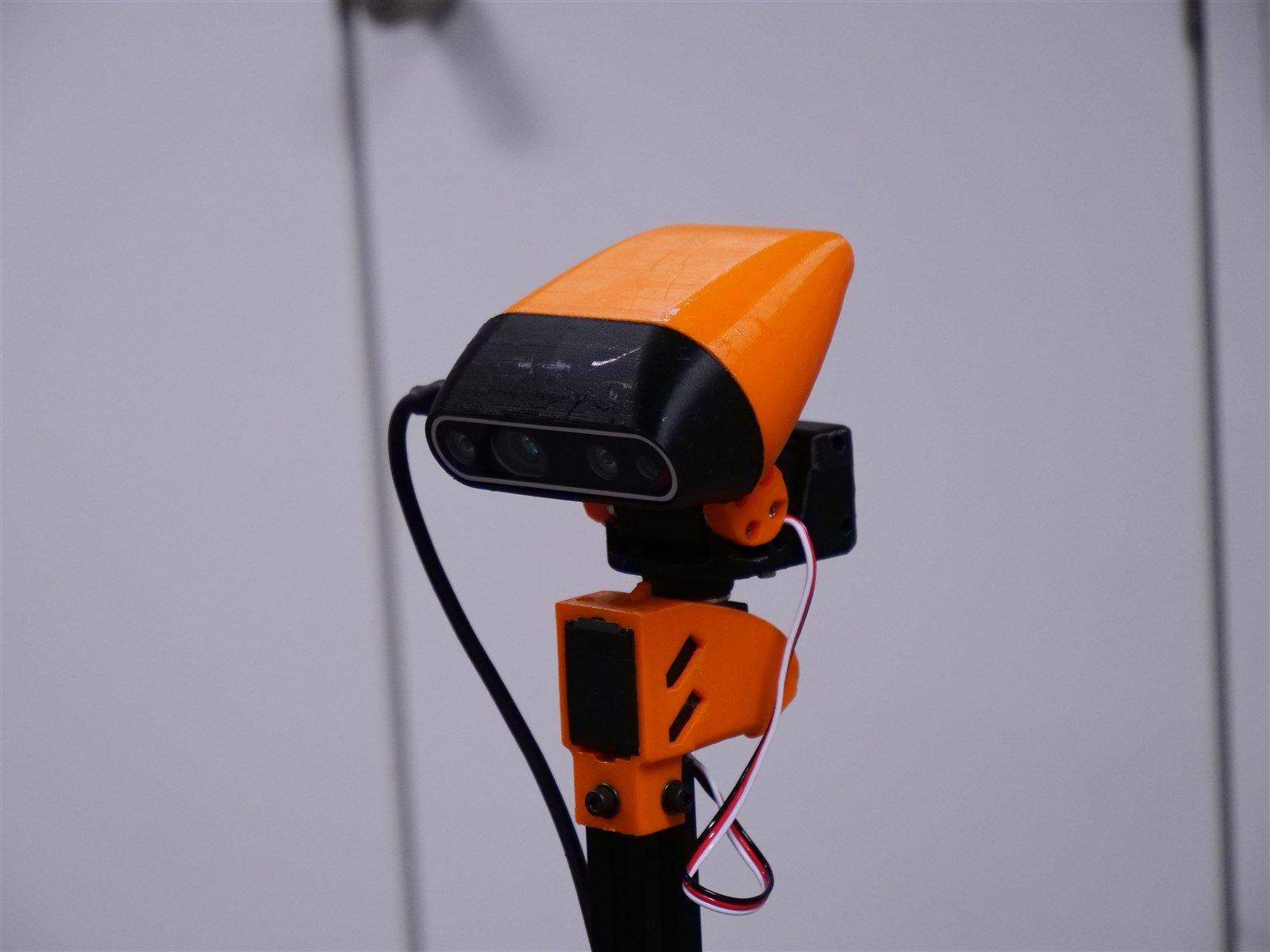
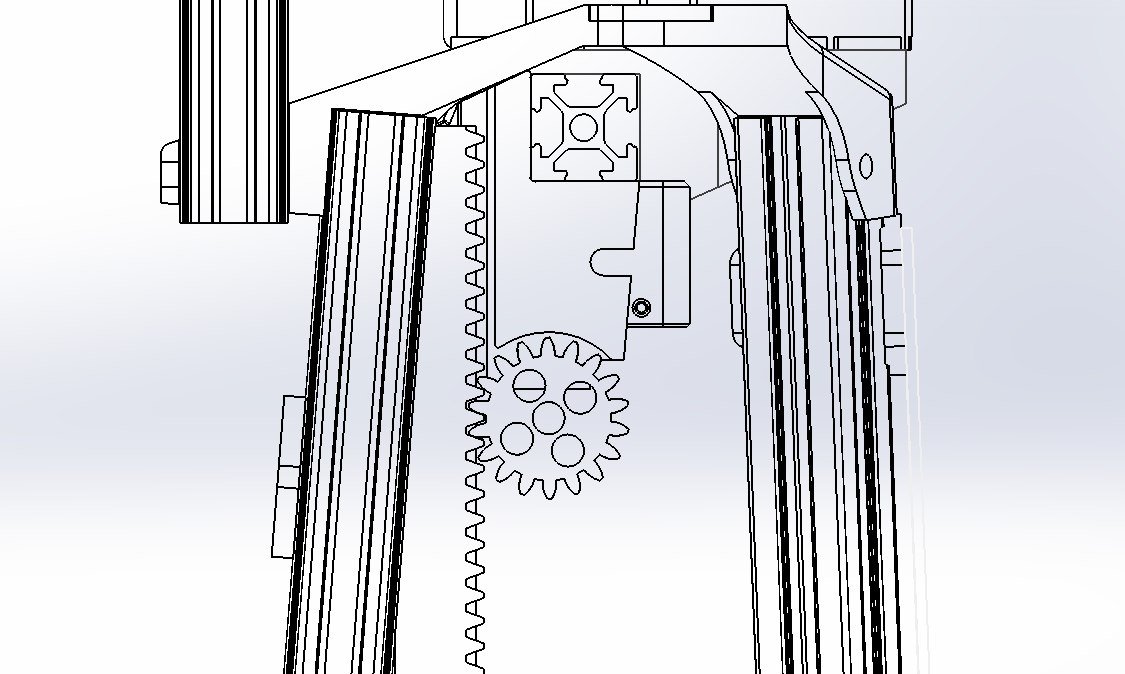
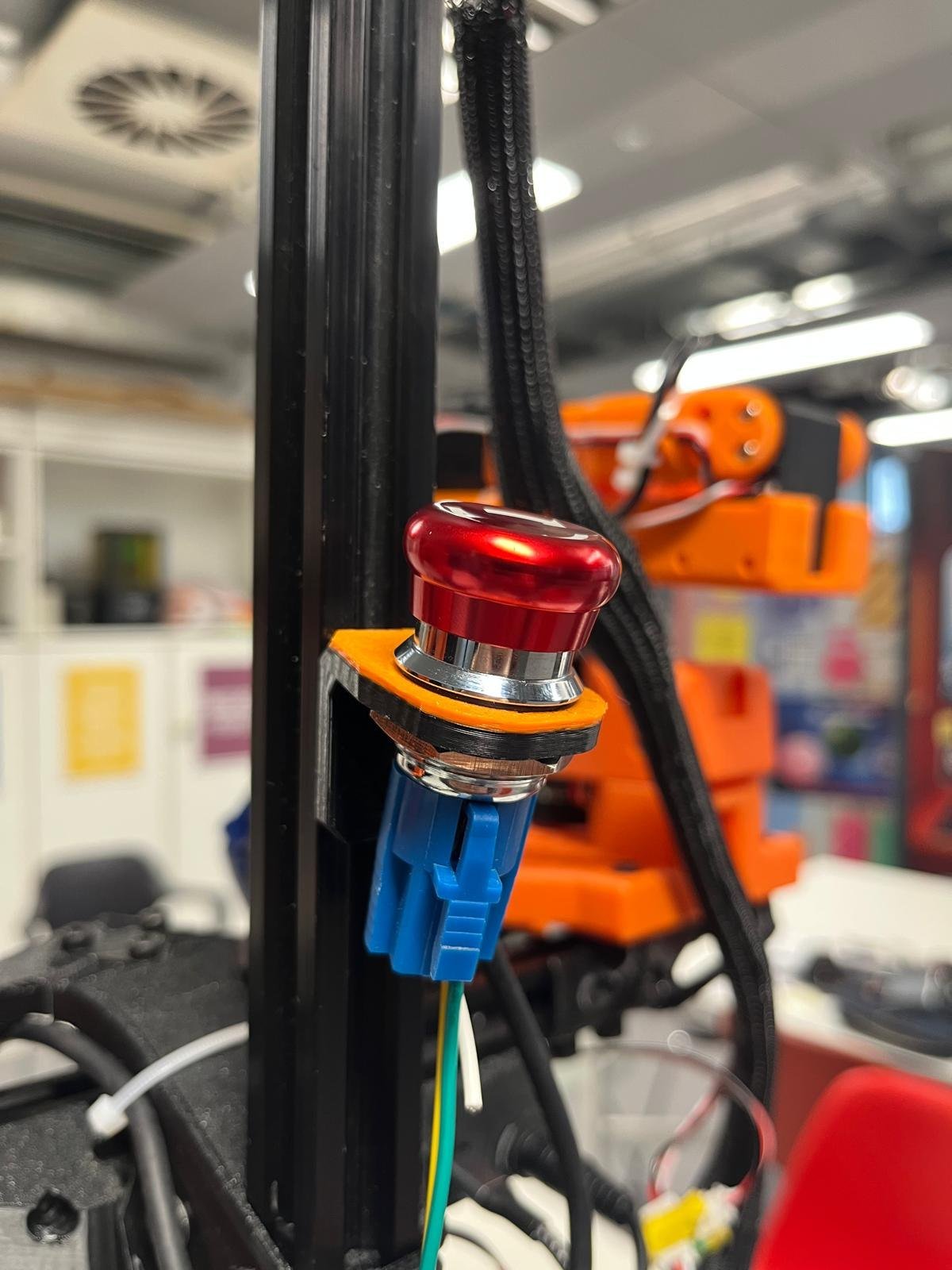
- v3 · Jan–Feb 2026: Pincopen parallel grippers, a pan-tilt head camera that follows the operator’s headset, a rack-and-pinion lift with 600 mm of travel (chosen over a lead screw for torque), an independent ESP32 e-stop that cuts motor power, and stage-aware reward annotation (SARM) for the datasets.
06 · latest version
Results, and what’s next
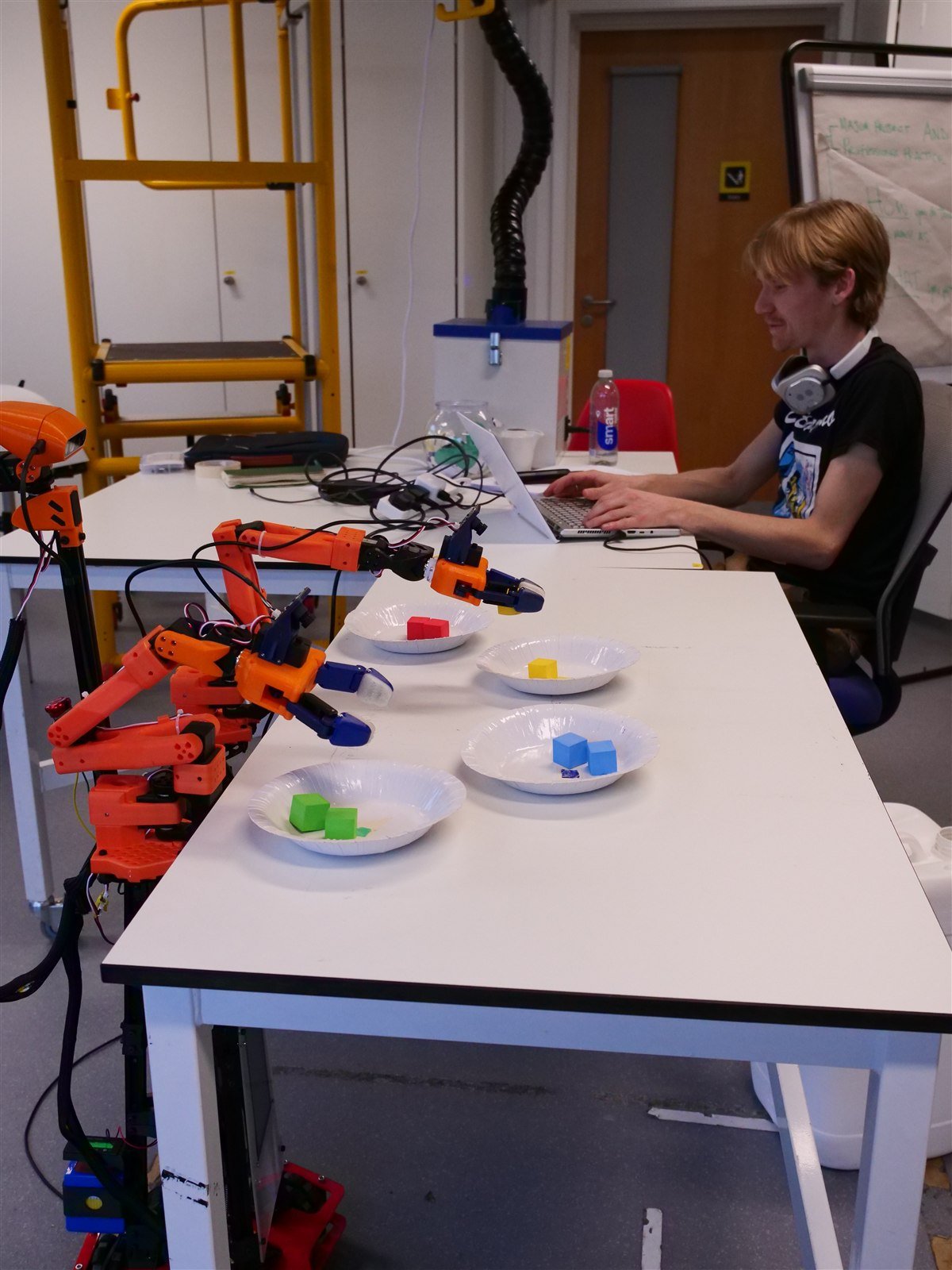
About 8 hours of teleoperated data across four tasks: block transfer, putting a tool in a box, sorting blocks by colour, and mobile trash pickup. Overall success was 43%, against Mobile ALOHA’s ~90% at roughly 30× the cost. Colour sorting failed at first, then worked after targeted data collection; a clear plastic bottle on a featureless floor was the hardest case.
The lesson: data quality matters more than quantity. Next comes a centre-of-mass redesign to support tactile sensing on the grippers, a holonomic base and larger arms. Read more: the hardware → · the policy learning →
| stack | ROS 2 · Nav2 · SLAM · LeRobot · SmolVLA |
| control | Meta Quest VR, voice/LLM |
| datasets | OB15 datasets on Hugging Face · all of my datasets |
| code | github.com/ImpurestTadpole/ob15 · telegrip_ob15 (VR teleop) · LeRobot fork · XLeRobot fork |